
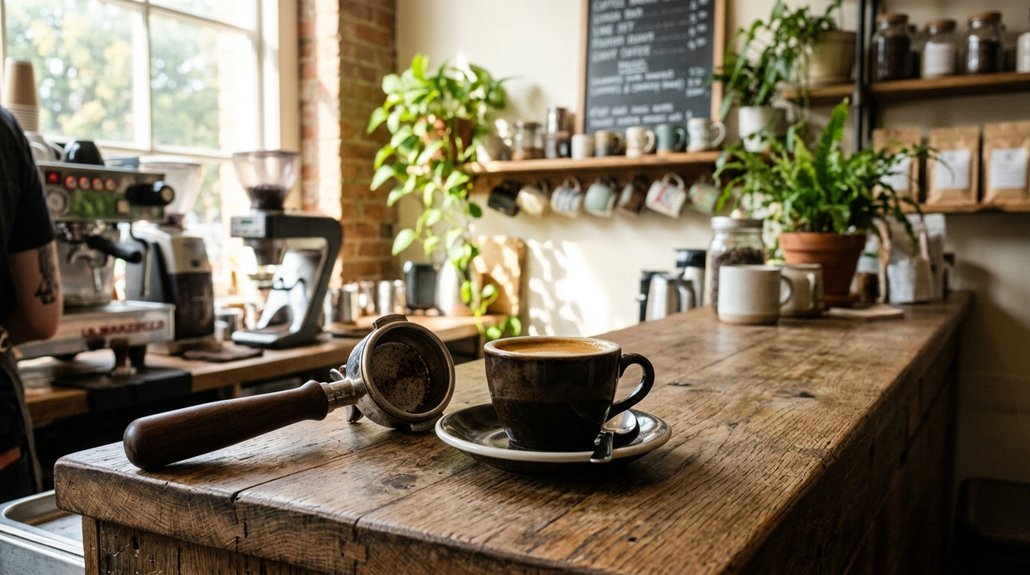


Does the 25–35 second rule really guarantee a balanced double shot, or is that just one piece of the puzzle? You’ll need fresh beans, a burr grinder, a portafilter, and a machine that can reach 9 bars of pressure.
Grind 18–20 grams fine enough to feel like table salt, then dose, distribute, and tamp with about 30 pounds of force. Lock the portafilter in place, start your pump, and watch for a steady stream of honey-colored espresso.
If your shot runs too fast or slow, or tastes sour or bitter, your grind needs adjusting. Get these variables right, and you’re closer than you think.
What You’ll Need to Pull a Double Shot
You’ll need a few basic items before you start, and most of them are probably already in your kitchen or easy to find.
First, you’ll need an Espresso machine that can pull a Double Shot with consistent pressure, ideally near 9 bar. You’ll also want a quality grinder with burr blades, not blades that chop unevenly, so your grounds come out the same size every time.
An espresso scale matters more than you’d think. You’ll weigh 18 to 20 grams of coffee going in, and you’ll measure what comes out, so buy one that reads in grams and fits under your cup.
Consider a puck screen, too. It’s a thin metal disc that sits on your grounds, and it helps water spread evenly.
Finally, you’ll need tools for dosing and tamping: a scoop or funnel, and a tamper that fits your basket. You’ll press with about 30 pounds of pressure, level and firm.
Recommended Products

20-Bar Pressure & Gentle Pre-Infusion Optimizes Home Extraction: Built for apartment dwellers and coffee beginners, this semi-automatic maker uses 20-bar pressure and mild pre-infusion to soak grounds evenly. It reduces uneven extraction, creates rich golden crema and balanced flavor. Proper grinding and tamping brings pure tasty espresso for daily home brewing
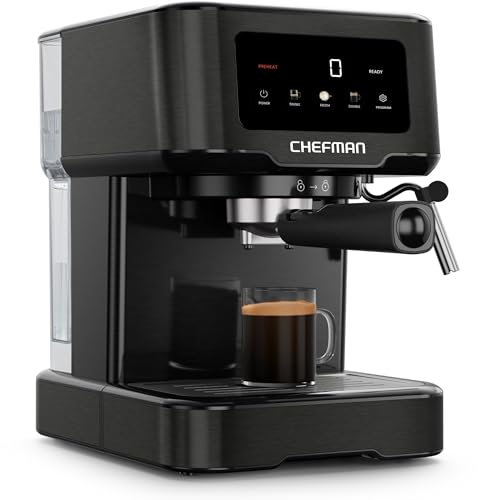
ENJOY CAFÉ-QUALITY ESPRESSO: Experience the bold, rich flavor of homemade espresso and skip long café lines with the CraftBrew Digital Espresso Maker! A strong 15-BAR pump and a built-in milk frother make it easy to brew cappuccinos and lattes right in your own kitchen.

ENJOY CAFÉ-QUALITY ESPRESSO: Experience the bold, rich flavor of homemade espresso and skip long café lines with the CraftBrew Digital Espresso Maker! A strong 15-BAR pump and a built-in milk frother make it easy to brew cappuccinos and lattes right in your own kitchen.
Grind to Espresso-Fine: Texture and Consistency
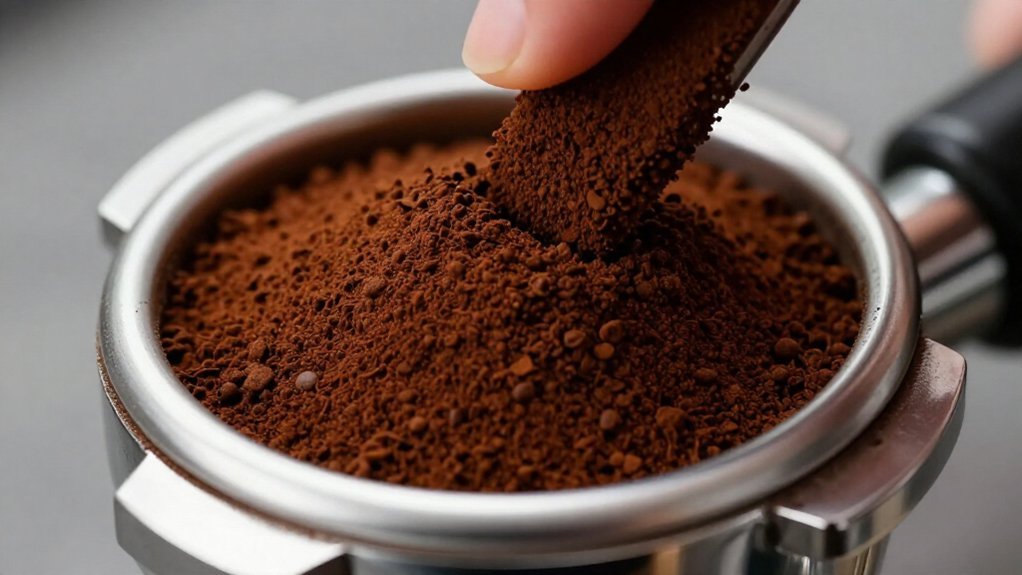
Because fresh grounds make the biggest difference, you should grind your beans right before you brew. For a double shot of Espresso, set your grinder to produce an espresso-fine texture, similar to fine sand or table salt. This Grind Size creates a consistent grind that lets water pass through the coffee puck evenly without channeling.
Adjust your grinder in tiny steps, since grind consistency directly controls extraction. Too coarse under-extracts, giving weak, sour results, while too fine over-extracts, creating bitter, burnt flavors. Aim for a 25–35 second extraction time as your main indicator.
If your shot runs under 18–20 seconds, grind finer to slow the flow. If it runs over 35 seconds, grind coarser to speed it up. Change only the grind, then re-test.
Recommended Products
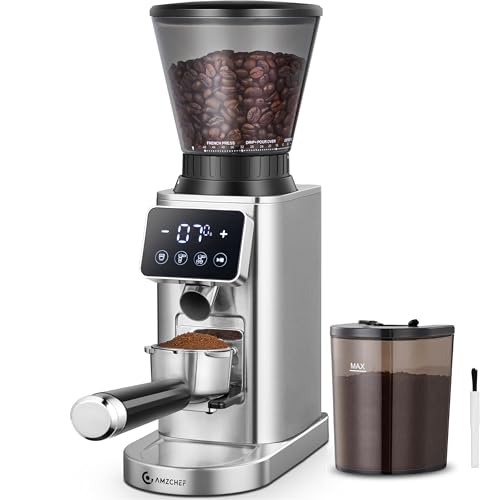
【48 Grind Settings】Easily adjust from fine espresso to coarse French press, pour over, drip coffee, and cold brew for your perfect cup every time
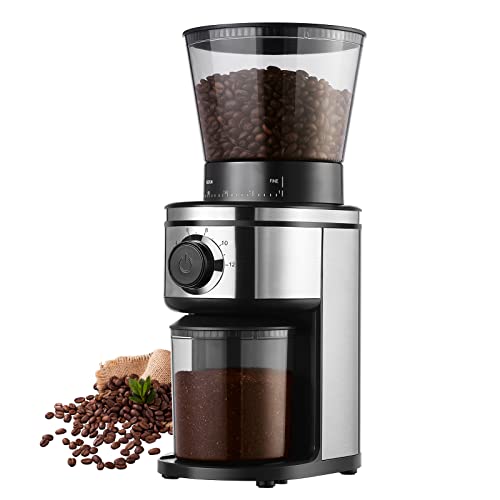
【Durable Conical Burr】With 40-millimeter stainless steel conical burrs, OLLYGRIN burr coffee grinder ensure optimal flavor extraction and create uniform grounds.
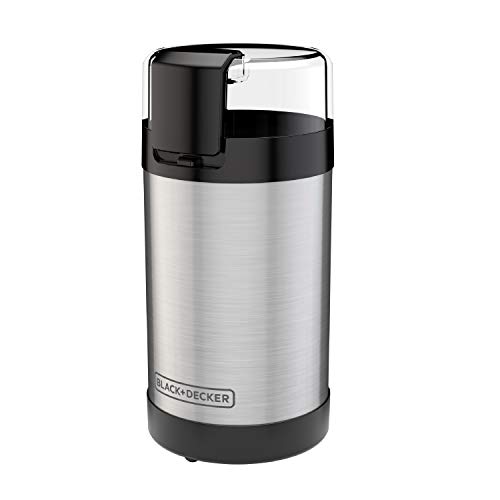
STAINLESS STEEL BLADES AND BOWL - The sharp blades and durable grinding bowl are built to last, delivering uniform grinds with every use
Dose 18–20 Grams and Distribute Evenly
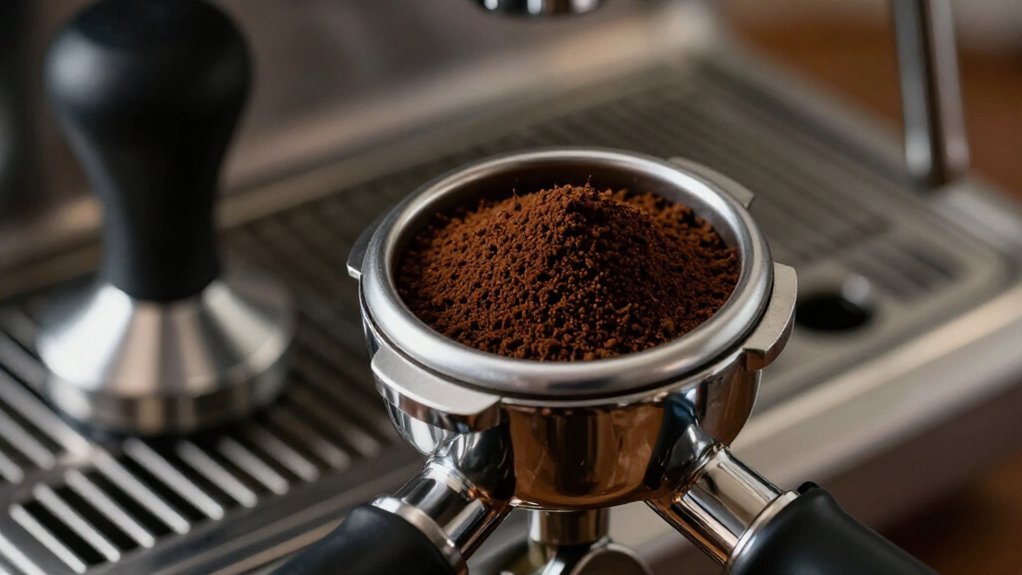
Once your grind is set, you’re ready to measure your coffee. You’ll need 18–20 g of ground beans to make a double espresso, since this dose fits most standard double baskets. Place your portafilter on a scale, tare it to zero, then add your ground beans until you hit your target weight. Measuring by grams, not scoops, keeps your espresso recipe consistent every time.
Now you must distribute evenly across the basket. Shake the portafilter gently, or use your finger to spread the grounds level. Check that the bed looks flat, with no hills or valleys, so water will soak through all the coffee at the same pace.
Good distribution prevents weak spots, giving you a balanced double shot you can repeat.
Recommended Products

【Ultra Small, Yet Professional】The Espresso Scale is small enough to fit in your palm. It measures 4.13*4.13*0.78 inches and weighs just 0.75 pounds. The coffee scale can work on most espresso machines and small pour-over coffee stands. It's easy to store and carry around, making it perfect for coffee lovers who like outdoor coffee.

SLEEK AND INTUITIVE DESIGN: The Subminimal Subscale boasts a matte black finish with a barely visible capacitive touch on/off switch. Its invisible LED display activates with a simple touch, offering a streamlined and elegant way to weigh your coffee grounds. This modern design elevates your kitchen gadgets while simplifying your brewing experience.

Compact and Mini Design: This coffee scale is mini in size, measuring 4.11x4.11x0.79 inches. It can be placed directly in the palm of your hand and can be easily placed on the coffee machine's water tray, leaving enough space to hold coffee cups. It is suitable for home coffee machines or small travel coffee machines.
Tamp Firm and Level (About 30 Lbs Pressure)
You’ll apply about 30 pounds of pressure with a firm, even push to compress your grounds into a flat, solid puck. Keep your tamp perfectly level, not tilted, so water flows through the coffee at the same rate everywhere.
If you spot an uneven surface after pressing, redistribute the grounds and tamp again rather than pulling a shot that’ll channel and taste off.
Recommended Products

High-quality material: The espresso mesh are made of safe & food-grade 316 stainless steel mesh, reusable and eco-friendly, rustproof and corrode. Reliable construction of 1.7mm thick dual-layer 150 microns filtration holes, exquisite puck screen for various coffee machine lever.
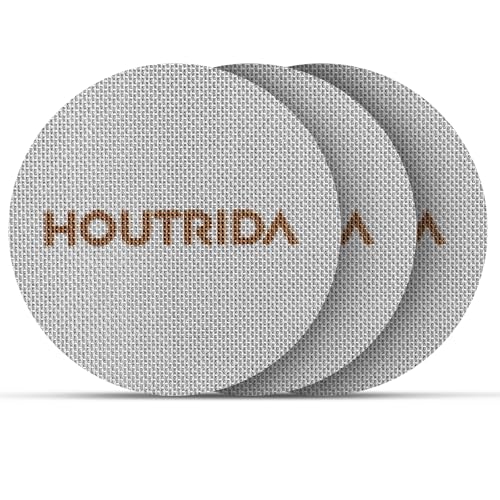
【Essential Espresso Accessory】 Includes 3x 53.5mm espresso puck screens that keep your espresso machine cleaner and improve brewing quality. Prevents grounds from reaching the shower head and makes cleanup quick and mess-free for homes, offices, or cafés

IDEAL FOR BREWING ESPRESSO - Prevents channeling, ensuring a balanced and consistent brew. Softens and evens out water delivery to the coffee bed for optimal extraction
Proper Pressure Application
After you’ve dosed 16–18 grams of coffee into your portafilter basket and leveled the grounds, it’s time to compress them into a solid puck. You’ll want to apply proper pressure, about 30 pounds of firm, even pressure, so the coffee compresses uniformly. Use a scale to check your dose first, then keep your wrist straight and your elbow at a right angle as you press down.
Keep the tamp flat and level, so the puck surface stays even and smooth. This prevents water from finding weak spots and channeling through too fast. Apply the same pressure every time you make an espresso shot, since inconsistency throws off your results.
Check that the top looks smooth and level before you lock the portafilter into the group head.
Level Tamping Technique
With the grounds evenly spread in your basket, you’re ready to compress them into a solid puck. You need about 16–18 g of ground coffee in a double basket, then you’ll tamp into a flat, level puck so water doesn’t channel through uneven spots.
Apply firm, even pressure, aiming for roughly 30 lbs of tamp force, and keep the portafilter level during the tamp. Tamp straight down in one smooth motion, no rocking, to compress the coffee grounds uniformly for consistent extraction.
Check the surface after tamping. It should look smooth and level, because an uneven puck can cause inconsistent flow and taste. After tamping, wipe off any loose grounds around the rim so the basket sits correctly and maintains an even seal. When you grind your coffee fresh, you’ll get better results with this technique.
Lock In and Pull Your Double Shot
You’ll lock the portafilter into the group head with a firm, quarter-turn motion, then start the pump immediately to begin your pull. Watch the espresso flow, aiming for about 18 to 22 seconds of extraction time, and stop when you’ve reached roughly 30 grams of liquid if you started with 20 grams of grounds.
Finally, inspect the surface for a thick, golden layer of crema, which tells you the shot pulled correctly.
Recommended Products

CONSISTENT BARISTA PRECISION EVERY TIME - Calibrated to exact 30lb pressure via reliable spring system, this self leveling tamper delivers perfectly even espresso pucks for balanced extractions, richer crema, and professional flavor—eliminating variability shot after shot.

Self Leveling & Spring-Loaded Design: This 58mm coffee tamper features an innovative auto-leveling mechanism and a double spring system that apply consistent pressure for a perfectly level tamp and an evenly compacted puck every time

IMPROVED CONSISTENCY – Our design-patented coffee tamper is spring-loaded and does not require additional adjustments. It comes with 3 interchangeable springs to suit your preference
Portafilter Preparation Steps
Once you’ve ground your beans to a fine, sandy texture, measure out 16 to 18 grams of coffee for your double basket. Grind the beans fresh each time you make a double shot, since stale grounds ruin flavor fast. Drop the finely ground coffee into the portafilter, then spread it level with your finger so nothing piles up on one side.
Next, press the tamper down firm and flat with about 30 pounds of pressure. You’re aiming for a smooth, even puck that sits level across the top. If you’ve got a puck screen, lay it on now; it’ll help water flow nice and steady. Lock the portafilter in tight, seat it fully, and start your pull right as the water hits. This Step-by-Step Guide keeps your timing right on track.
Shot Extraction Technique
Lock the portafilter in tight, then start your shot right away so the water doesn’t sit and scorch the puck. You’ll want your shot pulls to last 18 to 22 seconds from the first drop, so keep your eyes on the timer.
To Pull the Perfect Shot when making espresso at home, aim for about 30 grams of liquid from 20 grams of grounds. That’s your 1 to 1.5 ratio, and weighing beats guessing every time.
If your espresso shots finish under 18 seconds, grind your espresso beans a touch finer. If they drag past 22 seconds, go slightly coarser. Either way, you’re fighting uneven extraction, which ruins the cup. Get the timing right, and you’ll taste the difference immediately.
Crema Quality Check
Why does crema matter so much? It tells you right away if your strong coffee is on track, so you’ll want to do a quick crema quality check as soon as the espresso shot takes shape.
Lock in your portafilter, start the pull, and watch for thick golden crema to appear immediately. Your double-shot extraction time should land around 18–22 seconds, though some aim for 25–30 seconds. You’re using about 16–20g of coffee, tamped at roughly 30 lb, with water near 200°F and pressure at 9 bars.
The grind matters more than you’d think: too fine makes crema dark and bitter, too coarse leaves it thin and sour. Dial your grind to hit your target yield, like 20g in and 30g out. Taste and look confirm the result. Balanced flavor with rich crema means you’ve nailed it.
Watch the Extraction: Timing and Visual Cues
Start your timer the instant that first drop lands on the coffee puck, and keep your eyes on the stream as it flows into your cup. You’re aiming for about 18 to 22 seconds total, or 25 to 35 seconds depending on your machine and recipe. Watch the extraction closely, because timing tells you what’s happening inside the portafilter.
If your shot finishes under 18 seconds, your grind’s too coarse, or your dose or yield sits too low. If it drags past 22 seconds, you’ve gone too fine, or your yield and dose are too high. Look for rich, golden crema as your guide, and steer clear of pale, fast flows or dark, heavy drips.
Keep your home coffee shop setup steady, hold your dose around 16 to 18 grams, and adjust the grind in small steps. You’re making espresso without guesswork when you use beans roasted within the past few weeks, paired with careful timing.
Recommended Products
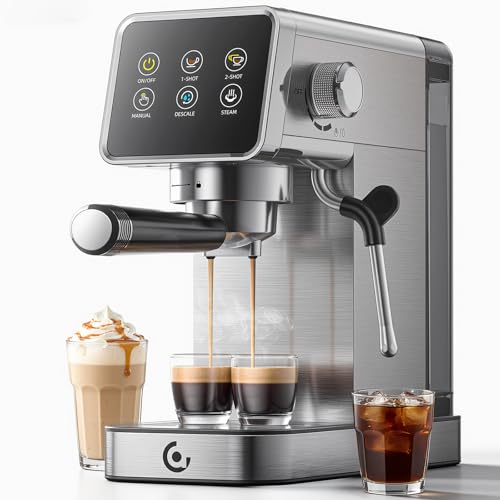
1350W Rapid Heating & 44oz Tank — Skip the wait. Our 1350W thermoblock reaches optimal temperature in under 3 minutes. The 44oz reservoir supports 8-10 cups before refilling — ideal for households. Pull shot after shot without interruption.

☕ 20 BAR PROFESSIONAL PUMP – CAFÉ-QUALITY EXTRACTION: Powered by a 20 bar pump with precise 9 bar extraction pressure, this espresso machine delivers rich crema and full-bodied flavor in every shot. NTC + PID temperature control keeps water stable at 198°F (92°C) – never sour, never bitter.

Make Your Favorite Espresso Coffee At Home: The CASABREWS coffee machine with milk frother allows you to prepare all your favorite espresso-based coffees. You can enjoy a barista-brewed latte, cappuccino or macchiato at home. Stainless steel appearance, stylish and durable, ideal for any size kitchen. This compact espresso machine is perfect for home or office use
Read the Results: Fix Sour or Bitter Double Shots
Once you’ve timed your shot and watched the stream, you’ve got to figure out what the cup is telling you. If your double shot tastes sour, you’re pulling too fast, under eighteen seconds. Use fresh beans and move to a fine grind, or add a bit more coffee. You’re aiming for eighteen to twenty-two seconds total.
If your double shot tastes bitter, it’s running too slow, past twenty-two or even thirty seconds. Switch to a coarser grind, or ease up on the dose. Target twenty-five to thirty-five seconds for balance.
You want a one to one point five ratio, so twenty grams in gives about thirty grams out. Check that your machine hits two hundred degrees and nine bars. Change one thing at a time, then weigh your dose and yield, and time it again. You’ll get espresso without the harsh edges, and a shot without guesswork.
Recommended Products

PROFESSIONAL CONICAL BURR COFFEE GRINDER- WIth new upgraded 3.0 conical burr grinding technoloy, the coffee grinder ensures that every grain of ground coffee powder is the same shape and size. The fines percentage below 15% for optimal flavor extraction and coffee taste. Compared to ceramic conical burr on the market, our coffee bean grinders are equipped with stainless steel conical burr for long-lasting durability.

40 EXTERNAL ADJUSTABLE GRIND SETTINGS - Unlike traditional grinders with internal adjustments, our manual coffee grinder offers 40 precise external settings. The easy-to-use adjustment ring lets you select your perfect grind level, broadening your coffee flavor options without the mess of stray grounds. Perfect for espresso, pour-over, French press, and more.

Slim, powerful grinder with precise settings from fine to coarse, with 15 settings and 29 micro-adjustments

I've spent years obsessing over the details that make a house feel like a home — from the perfect bedding layers to a thoughtfully styled coffee corner. My focus is on modern, aesthetic home decor ideas that are beautiful, trend-aware, and actually achievable. Great style shouldn't require a big budget — just the right inspiration.
Follow on Facebook