
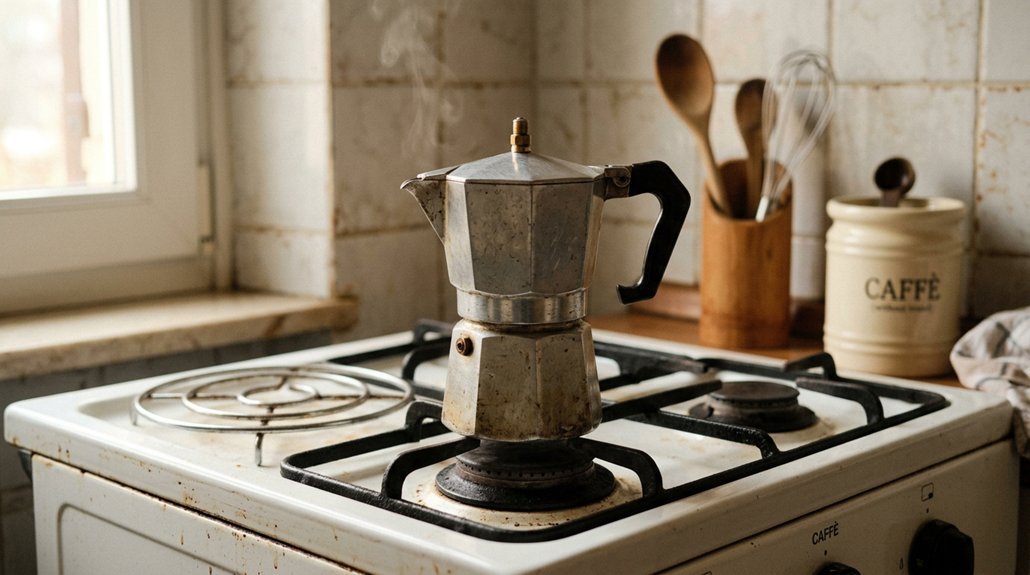


A moka pot is a bridge, not a destination. You hold it in your hands, fill the base with 240 milliliters of water, and screw on the aluminum top.
Steam builds, coffee rises, and you wait 90 seconds.
It looks dark, it smells strong, but it is not espresso. The machine on your counter, the one with nine bars of pressure, does something this stovetop tool simply cannot.
You will want to know what that difference means for your morning cup, and whether the gap matters enough to spend more money.
Why a Moka Pot Isn’t Real Espresso
Although a moka pot brews strong, concentrated coffee, it does not make true espresso because the pressure it creates is much too low. Your moka pot reaches only 1–2 bar of steam pressure, while an espresso machine pushes water through at roughly 9 bars. This gap matters.
You won’t get true crema from moka pot coffee, since that thick golden layer needs high pressure to form. Your grind size also differs: espresso uses very fine, packed grounds for 25–30 second extractions, but your moka pot percolates for 90–120 seconds. Temperatures climb past 100°C in your pot, whereas espresso stays cooler at 90–95°C.
Even “espresso-style” marketing can’t change the physics. You’re making espresso based concentrate, not real espresso.
Recommended Products

CRAFT COFFEE AT HOME: Produces six demitasse/espresso servings of rich, smooth espresso coffee in minutes. Craft your own espresso, Americano, Cuban coffee, Italian-style...
What Real Espresso Requires (That Moka Pots Can’t Deliver)
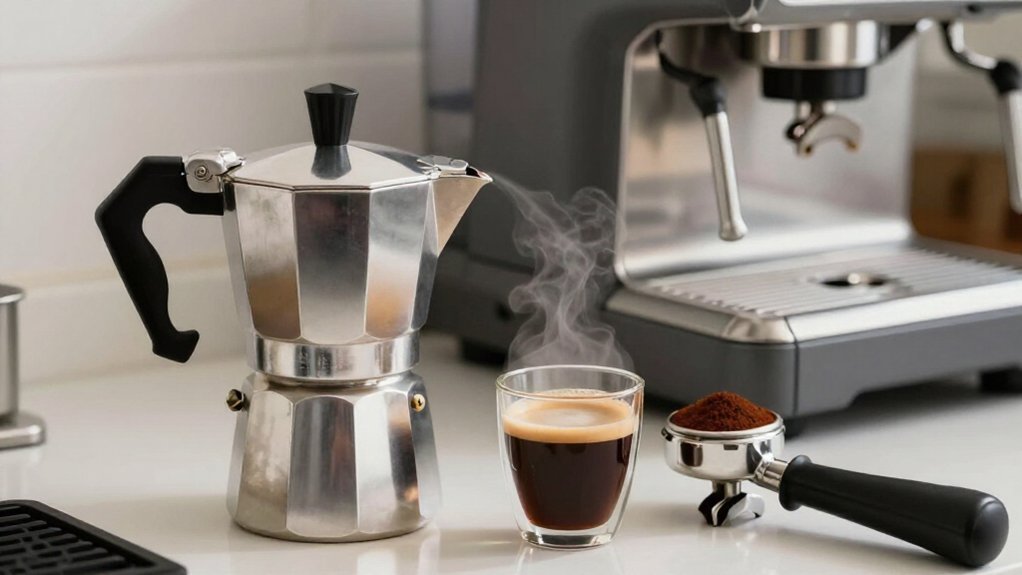
Real espresso demands specific conditions your moka pot simply cannot meet, no matter how carefully you brew.
First, real espresso requires high pressure of about 9 bars to force water through a tightly packed coffee puck. Your moka pot typically generates only 1 to 2 bars of steam pressure from boiling water, which falls dramatically short.
Second, espresso machines use very fine grounds and firm tamping to create proper resistance. Your moka pot uses a medium-fine grind with no tamping at all. Try packing it like espresso, and you’ll quickly face clogging and bitter over-extraction.
Third, real espresso produces thick golden crema through sustained 9 bars of pressure. Moka pot brewing yields little to none.
The temperature differs too. Espresso stays near 93°C with precise control, while your moka pot runs hotter near 100°C depending on heat and timing.
These gaps aren’t flaws you can fix. They’re boundaries built into the tool itself.
Recommended Products

The original moka coffee pot: Moka Express is the original stovetop espresso maker, it provides the experience of the real Italian way of preparing a tasteful coffee, its unique shape and the inimitable gentleman with moustache date back to 1933, when Alfonso Bialetti invented it.

【Moka Pot Note About Cleaning】ONLY Hand Wash! DON'T clean this coffee pot in the dishwasher. Please rinse the parts with clean water, dry them and assmble then. Soap is not recommended as it removes essential coffee oils that build up in the pot, which give the coffee brew its unique aroma and flavor.
How Moka Pot Brewing Actually Works
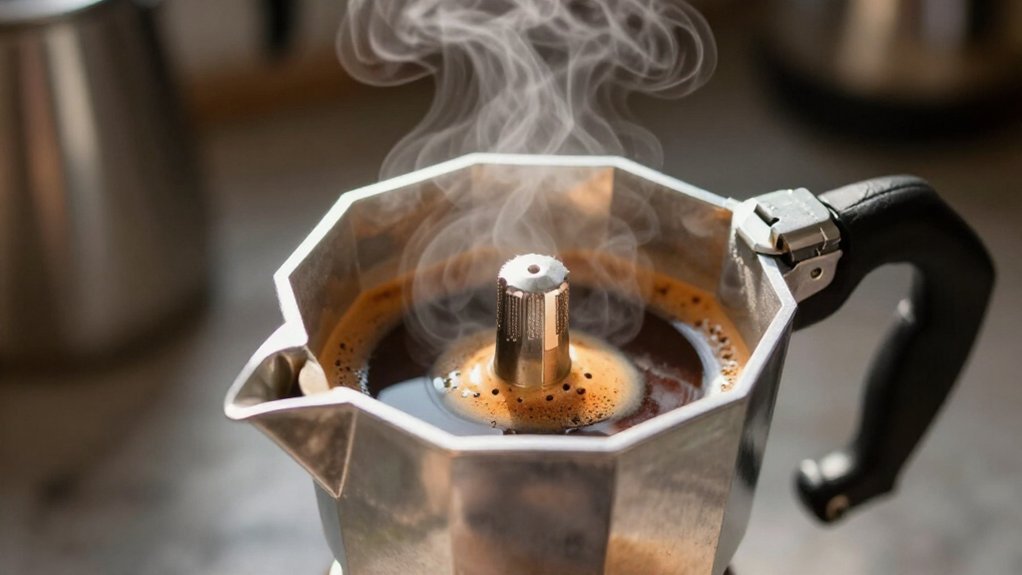
You pour water into the bottom chamber, which holds about one to three cups depending on your pot size, and as it heats on your stove the water turns to steam. That steam builds up one to two bars of pressure, forcing the hot water upward through your ground coffee in the basket and into the top chamber, collecting as a strong brew.
You’re working with much less pressure than an espresso machine uses, and the open flame means temperatures can climb past 100°C, so timing matters to avoid bitter, overdone results.
Recommended Products

The original moka coffee pot: Moka Express is the original stovetop espresso maker, it provides the experience of the real Italian way of preparing a tasteful coffee, its unique shape and the inimitable gentleman with moustache date back to 1933, when Alfonso Bialetti invented it.Filter type:Reusable

MEDIUM CAPACITY: This stovetop espresso maker brews six cups of rich, full-bodied coffee using traditional Italian moka pot brewing method, forcing hot water through grounds for barista-quality espresso flavor in minutes

VERSATILE CAPACITY: Brew 6 or 3 espresso cups (1.5 oz each), letting you adjust the serving size to suit your preference and occasion
Steam Pressure Mechanics
When you heat a moka pot, the water in the bottom chamber turns to steam and builds pressure, but only to about 1,2 bars, far below the 9 bars needed for true espresso.
You need to understand these pressure mechanics to use your Bialetti moka pot well. The steam pushes hot water up through the middle coffee basket, where your untamped, medium-fine grounds sit. Then the brewed coffee collects in the top chamber.
Moka Pots include a safety valve that limits pressure buildup. This valve keeps you safe, but it also prevents the brewing process from reaching true espresso levels. The flow cycles in a percolation style rather than maintaining constant high pressure. Watch for the steady stream to turn into sputtering; that’s your signal to remove the pot from heat before harsh flavors develop.
Water Temperature Dynamics
The steam pushing through your moka pot carries water that’s hotter than you might expect. In this brewing method, your bottom chamber heats boiling water to about 100°C, building 1–2 bar of pressure that forces hot water up through the coffee grounds.
Because the Moka lacks cooling systems found in espresso machines, water reaching your grounds can exceed 100°C. This differs sharply from espresso’s controlled ~93°C.
Here’s how temperature shifts affect your brew:
- Pre-heating water to ~90–96°C shortens heating time, reducing exposure to rising heat.
- As extraction progresses, falling water levels and continued heating push steamier, hotter flow.
- Pulling your pot off heat when flow turns to sputter/gurgle prevents harsher, over-extracted coffee.
Your collected brew shifts in temperature and strength during final seconds, rather than staying constant.
Brew Chamber Design
Steam pressure builds inside the bottom chamber once your water hits roughly 100°C, pushing liquid upward through a metal tube and into the coffee basket.
The Moka Express model uses this simple physics to move your coffee to the filter, but the pressure stays low, only 1-2 bars. That is far below the 9 bars true espresso machines create.
Your Pot uses steam lift, not forced percolation, so the flow stays gentler through the grounds. You will notice the sound shift from smooth pouring to sputtering when the boiler runs low.
Stop then, because residual heat can scorch your brew and ruin the coffee oils. The 1:9 to 1:10 yield gives you a strong, concentrated cup, but without real crema. It tastes bold, yet it is not true espresso.
What Moka Pot Coffee Tastes Like
You’ll taste a bold, intense profile that hits stronger than drip coffee, roughly two to three times the kick in your usual cup. Expect dark roasted notes that lean toward chocolate and caramel, especially when you stick to medium-dark beans and pull them off the heat before the pot starts gurgling.
The syrupy full body coats your tongue, though it stops short of true espresso’s thick crema since you’re only hitting about 1 to 2 bars of pressure, not the 9 bars a machine delivers.
Recommended Products

Café-Quality Espresso with PID Temperature Control:Enjoy rich, balanced coffee at home with this advanced espresso machine. Featuring PID temperature control and low-pressure pre-infusion technology, this espresso coffee machine maintains precise brewing temperature for consistent extraction, helping deliver rich crema, smooth flavor, and café-style results in every cup. Whether you are a beginner or a coffee enthusiast, enjoy professional-quality espresso with confidence

【Hands-Free Frothing with Optimized Angle】 Designed through repeated testing, the angled milk frothing station positions the pitcher at an optimized angle to help create a consistent milk vortex for smooth, silky microfoam. Simply place the included pitcher on the base, select your preferred temperature, and let the 1650W steam system with a dual-hole nozzle do the rest.

#1 Worldwide Espresso Machine Maker* *Independent Research Institute, Sales Leader, Full Year 2025
Bold Intense Profile
Often, a moka pot gives you coffee that’s strong and bold, hitting about two-thirds the intensity of true espresso, which still puts it well above your average drip machine. When you’re brewing with this stovetop brewer, you get strong coffee that feels like a concentrated shot, even though true espresso comes from much higher pressure.
Your moka pot runs at only 1-2 bar, so the texture won’t match espresso’s crema. Instead, you pull a thick, heavy-bodied cup that can turn harsh if you overheat it.
To nail the profile, focus on three things:
- Use medium-fine grind for proper resistance
- Keep heat medium-low for 90-120 seconds
- Stop at first sputter to avoid bitterness
Get this right, and you’ll have intense, aromatic coffee without crossing into burnt territory.
Dark Roasted Notes
When you brew with a moka pot, you’re usually working with medium-dark or dark roasts, and that choice shapes what ends up in your cup. Moka pot coffee carries dark roasted notes that sit heavier than drip but don’t match true espresso’s balance.
Since the Stovetop Espresso reaches only 1–2 bars of pressure, it can’t make espresso the way a machine does. In a Pot vs machine comparison, you’re getting percolation-style extraction, not crema-driven results. The coffee grounds release bold, roast-forward flavors, often chocolatey or slightly sweet when you stop the heat around 90–120 seconds.
If you let it sputter too long, the brew turns harsh. With proper timing and a medium-fine grind, you’ll keep those dark roasted notes smooth rather than bitter.
Syrupy Full Body
The texture of what lands in your cup matters just as much as the roast. When you brew with a moka pot, you’re working with about 1–2 bars of pressure, not the 9 bars that true espresso machines use. That lower pressure still pulls enough from your ground coffee to make espresso-like coffee that feels thick on your tongue.
Here’s what creates that syrupy full-bodied result:
- You keep a tighter coffee-to-water ratio, around 1:9 to 1:10, so more dissolved compounds end up in your stovetop coffee.
- You brew slowly on medium-low heat for roughly 90–120 seconds, stopping before the gurgling starts.
- You pick darker coffee beans, since they extract oils that add weight.
Your finished cup won’t carry espresso’s golden crema, but it’ll land between an americano and espresso in heft.
How to Brew Your Best Moka Pot Coffee
Grab your grinder and prepare to dial in a medium-fine texture, something between pour-over sand and espresso powder, since this single choice determines whether you’ll extract rich, full flavor or end up with thin, bitter disappointment. Fill the basket with Specialty Coffee, level it by tapping or using a straight edge, and never tamp.
For this Italian coffee maker, preheat water to 195–205°F, then pour it into the lower chamber up to just below the safety valve. Use about 20g coffee for 120ml water in a 3-cup model.
Brew on medium-low heat for 90–120 seconds, stopping when the flow sputters. Cool the base under cold water for 10–15 seconds, stir, and serve.
Recommended Products
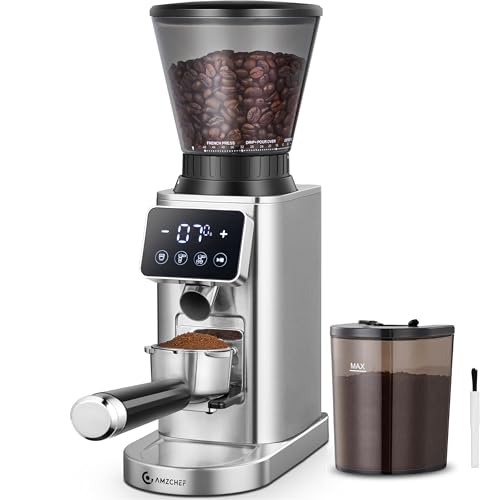
【48 Grind Settings】Easily adjust from fine espresso to coarse French press, pour over, drip coffee, and cold brew for your perfect cup every time
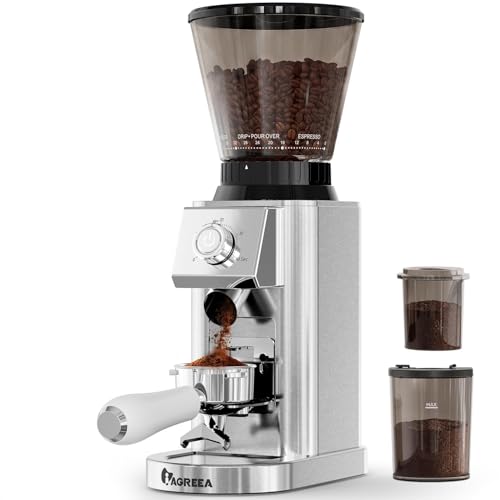
𝗣𝗥𝗘𝗖𝗜𝗦𝗘 𝗚𝗥𝗜𝗡𝗗 𝗖𝗢𝗡𝗧𝗥𝗢𝗟 𝗙𝗢𝗥 𝗔𝗡𝗬 𝗕𝗥𝗘𝗪 - With 48 grind settings ranging from ultra-fine for espresso to extra-coarse for French press, you can easily dial in the perfect grind consistency for your preferred brewing method. Say goodbye to guesswork—enjoy café-quality results at home every time.

Premium 40 Millimeter Stainless Steel Conical Burr: Designed to minimize grinding heat and protect the essential oils in the coffee bean, creating uniform grounds for optimal flavor extraction.
Should You Get a Moka Pot or an Espresso Machine?
Your choice between these two brewers depends on what you actually want in your cup, and how much you’re willing to spend to get it.
Your choice between these two brewers depends on what you actually want in your cup, and how much you’re willing to spend to get it.
A moka pot gives you strong, concentrated coffee for about $30-50, while espresso machines start around $200 and climb past $1,000 for quality setups. You’ll need a coffee grinder either way, but whole bean freshness matters more with espresso machines.
Consider these three factors before deciding:
- Budget: Moka pots cost far less upfront, with no extra parts to replace.
- Learning curve: Moka pots need heat timing, while espresso machines demand precise tamping, grind size, and pressure control.
- Drink style: You want true crema and thick body, or just strong coffee for milk drinks?
For espresso at home without the fuss, grab a moka pot. You want cafe-quality shots, invest in a real machine.
Recommended Products

Venus is the perfect combination of tradition and innovation: the original induction coffee maker that prepares a perfect coffee, with a Made in Italy taste from a pot with a unique design.

Moka Espresso Coffee: Stovetop espresso maker, Moka pot, & manual coffee percolator machine. Available in 3-cup, 6-cup, 9-cup and 12-cup sizes. The stove top percolator makes home espresso like a barista. It's easier to use than an electric espresso machine and makes a rich cup of espresso mocha.3 cup, 6-cup, 9-cup and 12-cup expresso coffee pot, stove top size, food grade aluminum Espresso Moka coffee pot.

Venus is the perfect combination of tradition and innovation: the original induction coffee maker that prepares a perfect coffee, with a Made in Italy taste from a pot with a unique design.

I've spent years obsessing over the details that make a house feel like a home — from the perfect bedding layers to a thoughtfully styled coffee corner. My focus is on modern, aesthetic home decor ideas that are beautiful, trend-aware, and actually achievable. Great style shouldn't require a big budget — just the right inspiration.
Follow on Facebook