
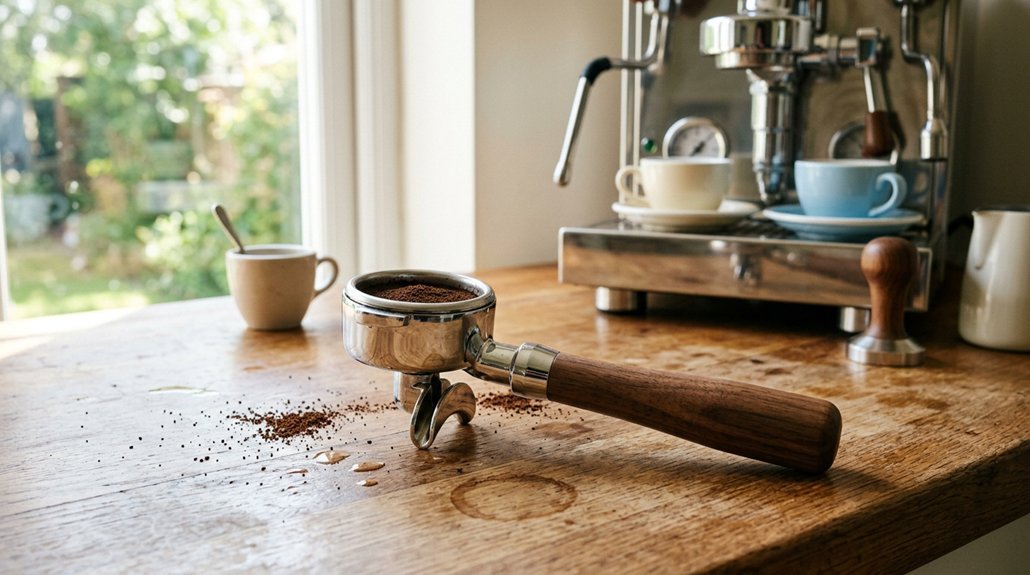


You pull a double shot, and about 2 ounces land in your cup. That is the usual target, but your machine, your beans, and your crema all nudge that number up or down.
If you want consistency, you weigh the yield instead. The real question is why your 2-ounce shot might taste wrong even when the volume looks right.
How Many Ounces Are in a Double Shot of Espresso?
How much espresso does a double shot actually give you? You’ll typically get about 2 fluid ounces, or roughly 60 mL, when you pull a standard double shot espresso. That’s your baseline Espresso Shot Volume.
Single vs Double Shot comparisons are straightforward: a single yields about 1 fluid ounce, so you’re simply doubling that output. Most cafes use 14–18 grams of coffee for doubles versus 7–9 grams for singles, keeping the brew ratio consistent.
You might notice your grams of liquid don’t always match the fluid ounce reading exactly. That’s normal. Crema, the golden foam on top, adds visible bulk without weighing much, so volume and weight can diverge. For practical purposes, expect 2 fluid ounces in your cup, though specialty drinks like ristrettos or lungos adjust this standard.
Recommended Products

【Ultra Small, Yet Professional】The Espresso Scale is small enough to fit in your palm. It measures 4.13*4.13*0.78 inches and weighs just 0.75 pounds. The coffee scale can work on most espresso machines and small pour-over coffee stands. It's easy to store and carry around, making it perfect for coffee lovers who like outdoor coffee.

𝗘𝘀𝗽𝗿𝗲𝘀𝘀𝗼-𝗦𝗶𝘇𝗲𝗱 & 𝗠𝗮𝗰𝗵𝗶𝗻𝗲-𝗙𝗿𝗶𝗲𝗻𝗱𝗹𝘆: At just 5.7 × 3 × 0.7 inches, this scale fits under most home espresso machines, with integrated rubber feet that keep it planted on busy countertops without sliding or shifting during use.
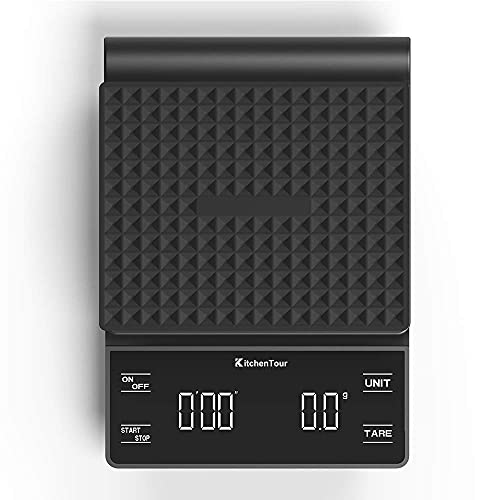
PRECISE MEASUREMENT & WIDE RANGE: KitchenTour EK6002 defines the latest in precision weighing technology with a weight capacity from 0.3g - 3000g to help you measure and get an exceptional cup of coffee with refined accuracy
Why Your Double Shot Doesn’t Measure Exactly 2 Ounces
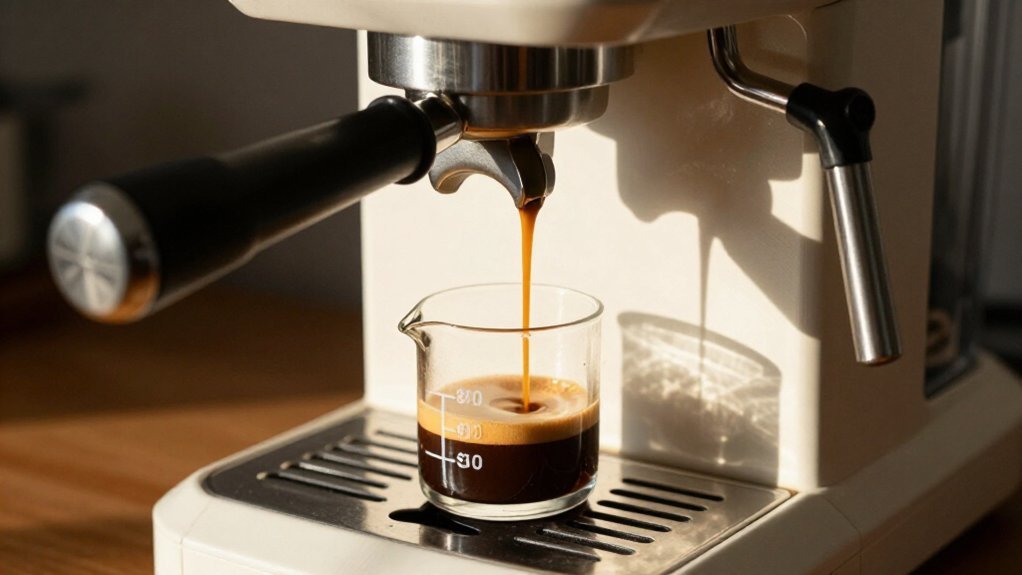
You might notice your double shot looks like 2 ounces at first, then shrinks to about 1.5 ounces once the foamy crema settles. Your machine or café may also be set to pour a different amount, like 1.5 ounces, even when it’s called a double.
On top of that, many baristas now weigh their shots instead of measuring by volume, so your 2-ounce expectation won’t match their 36-to-40-gram target.
Recommended Products

𝐋𝐎𝐎𝐊 𝐆𝐑𝐄𝐀𝐓 𝐎𝐍 𝐘𝐎𝐔𝐑 𝐓𝐀𝐁𝐋𝐄: Our shot glasses are thick and durable shot glasses are perfect for your bar cart, boasting a unique design that adds style to any gathering; enjoy your favorite drink without worrying about breakage!

☕️ STURDY & TOP QUALITY STAINLESS STEEL: The Milk Frothing Pitcher and Latte Art Pen are made of #304 STAINLESS STEEL. Well-made, rust-proof, stain-proof, heat-proof, and nontoxic. Dishwasher-safe, easy to clean and use.

☕️ STURDY & TOP QUALITY STAINLESS STEEL: The Milk Frothing Pitcher and Latte Art Pen are made of #304 STAINLESS STEEL. Well-made, rust-proof, stain-proof, heat-proof, and nontoxic. Dishwasher-safe, easy to clean and use.
Crema Volume Effects
Crema foam can trick your eyes when you’re measuring a double shot, since this light, airy layer adds extra bulk without adding much actual coffee.
That layer of crema gives volume without adding real coffee mass, because crema is far less dense than the liquid espresso beneath it. Your cup looks fuller than it truly is, even when the actual volume of water extracted stays consistent. After your shot sits, bubbles pop and that apparent volume shrinks. A double that briefly hits 2.0 oz might settle closer to 1.5 oz as the foam fades.
Crema thickness changes with bean freshness, pressure, and how your puck extracts, so two espresso shots can look different even with matching doses. To avoid this guessing game, many baristas now measure espresso by weight, targeting roughly 36–40 grams for a typical double.
Machine Calibration Differences
Even when the foam settles, your double shot might still miss the 2-ounce mark for a different reason: your machine’s own settings. Your espresso machine likely runs on factory machine calibration that sets its own programmed yield, and that “double” button may pour closer to 1.6 ounces (volume) instead of the full 2 ounces you expect.
Your flow rate also shifts what collects in the cup. A slower pull, caused by finer grinds or partial clogs, gives you less liquid in the same 20–30 second window. Some cafes set their machines for even smaller outputs, while home units vary by brand and age.
Check your manual to see what programmed yield your model actually delivers, and measure your results with a small scale or shot glass to know where you stand.
Brew Ratio Preferences
Why does your double shot land closer to 1.5 ounces on some days and push past 2 ounces on others? Your brew ratio preferences directly shape what ends up in your cup. A common target is the 1:2 ratio, where 18 grams of ground coffee yields about 36 grams of liquid. This often looks like roughly 2 ounces, but it can vary.
Espresso typically contains crema, that foamy layer on top, which inflates volume without adding much actual liquid. You’re measuring by weight, rather than volume, to get consistency, since crema breaks down quickly and changes your reading.
If your grind shifts or flow slows, your double shot of espresso might finish at 1.5 ounces or stretch toward 2.5. Some cafes program doubles even lower, around 1.6 ounces, so “double” isn’t a fixed number. Weigh your shots in grams for reliable results.
How Crema Makes Your Double Shot Look Bigger Than It Is
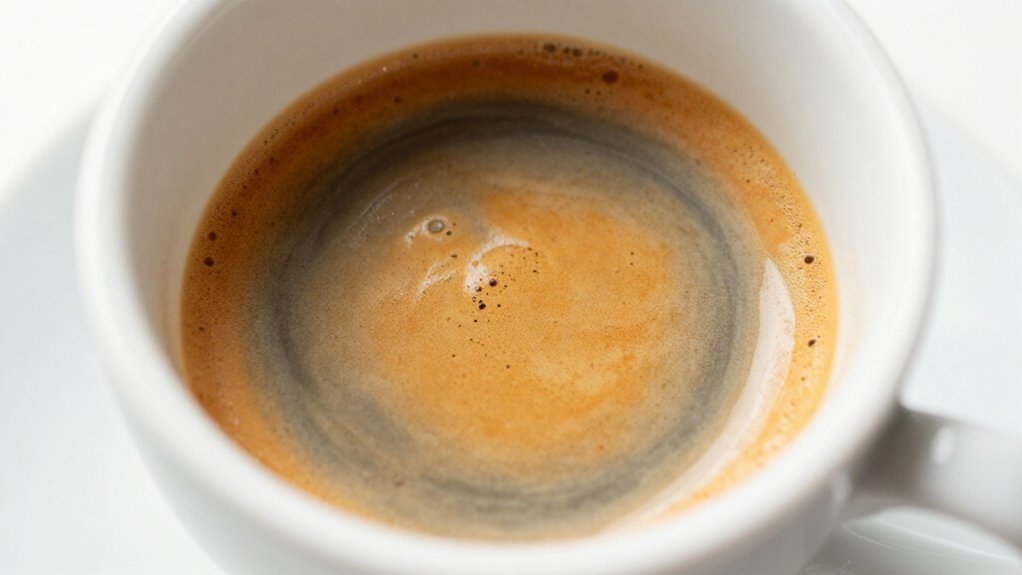
When you pull a double shot, the machine dispenses about 2 fluid ounces of liquid, but what you see in the cup can trick your eyes. Crema, that golden foam on top, puffs up the volume without adding much actual espresso. This layer of CO₂ bubbles mixed with coffee oils sits light and airy, so your Double might look closer to 3 fluid ounces even though the real liquid stays near 2.
Since crema varies with bean freshness and pressure, one shot can read high, then shrink as bubbles pop. You might think you’re getting more, but the weight rather than the volume tells the truth. A “60 mL” serving could hold 40 mL of actual espresso plus 20 mL of foam, meaning you have less than it appears.
Recommended Products

A Noticeably Cleaner Shot: Compared to regular espresso cups or coffee cups, our stainless steel espresso cup removes more than 90% of coarse oils the cause of lingering bitter aftertaste. The result is a noticeably cleaner shot for espresso shot cups that demand quality

Sleek & Ergonomic Design - Elevate your coffee routine with a polished wooden handle and elegant ribbed glass body. Designed for a comfortable, non-slip grip, it brings both style and functionality to your daily espresso ritual.

Coffee Accessories:The glass espresso cups have a wooden handle for a comfortable grip and a ribbed glass design;as espresso machine accessories,these espresso shot cups also serve as an espresso measuring cup to help achieve the perfect ratio
Why Grams Beat Ounces for Consistent Double Shots
Crema’s airy foam might fool your eyes, but it won’t fool a scale. Measuring by volume tricks you because that fluffy layer adds fluid bulk without adding real substance. A shot of espresso typically looks like two ounces, yet the actual coffee can vary wildly.
You need grams to lock in consistency. Weigh your coffee grounds before you brew, targeting about 14 to 18 grams for a standard double. Then weigh what lands in your cup. You’ll often aim for roughly twice the dose, maybe 18 grams in and about 36 grams out.
This ratio stays solid even when crema height shifts, or your machine runs slightly fast or slow. Grams remove the guesswork ounces leave behind. You’ll pull a consistent double shot every morning, no matter which beans you grind or how foamy the top looks.
Recommended Products

Capacity - Each Espresso cup has a capacity of 4 oz, perfect for double shots of espresso or other beverages at a time.meets your daily needs,It's a great helper for your coffee.

【Double Walled Anti-Scald Glass】This espresso cups set of 2 adopt the design of double glass. Air is sandwiched between the double-layer glass, which effectively insulates part of the temperature and prevents hot hands. Our espresso shot glass can also be used for cold drinks without condensation.

【ESPRESSO MACHINE ACCESSORIES】The capacity of 4 oz allows you to fill 2 servings of espresso at one time. Double spouts is more convenient to pour and not easy to leak, so glass espresso cup can pour smoothly without staining the tabletop and it is a good helper for your coffee.
Single vs. Double Shot: What’s the Difference Beyond Size?
You might think a double shot is just twice the liquid, but you’re actually getting a proportional boost in strength and concentration, since baristas use about twice the coffee grounds, around 14–18 grams, to pull that roughly 2-ounce yield.
This matters when you’re ordering a latte or cappuccino, because most cafés default to doubles in milk drinks so the coffee flavor doesn’t get lost, leaving singles better suited for straight sipping or smaller cups. If you want your espresso to stand up to steamed milk, you’ll want that double shot’s extra punch.
Recommended Products

【Dual-Layer Filtration】The upgraded espresso filter basket incorporates a dual-layer design. The inner filter prevents the escape of ultra-fine particles, while the outer filter enhances extraction efficiency and supports the inner mesh.
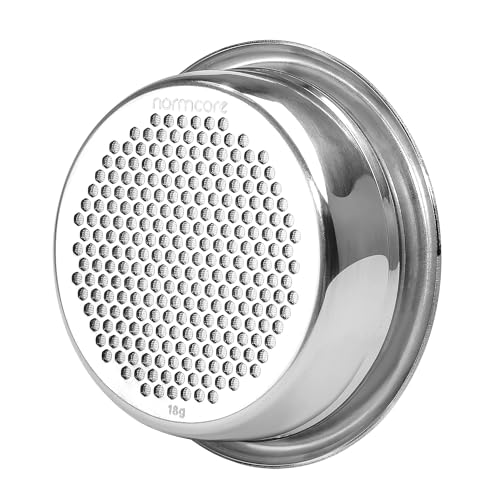
BETTER BREWS - A well-made filter basket is fundamental to a good cup. Deliver better brews with more control and achieve high extraction to fully develop your coffee grounds

WIDE MOUTH - The mouth is a perfect match for most portafilters and grinders. and makes for easy transfer of grounds.
Strength and Concentration
Why does a double shot feel stronger than just “more coffee”? You’re not simply getting extra liquid; you’re getting twice the amount of coffee in your cup. A single shot uses about 7–9 grams of coffee and gives you roughly 1 ounce, while a double shot uses 14–18 grams and gives you about 2 ounces.
This matters because the coffee-to-water ratio stays similar, so your strength and flavor don’t get watered down. You’re looking at roughly 90–150 mg of caffeine in a double, compared to 45–75 mg in a single. That extra dose means more dissolved solids, giving you a richer, bolder taste.
Don’t trust the cup line alone, though. Crema can trick your eye, so weighing your yield gives you real consistency.
Milk Drink Compatibility
When you’re building a milk drink, a double shot gives you about 2 ounces of espresso, and that’s what most recipes expect. Most milk drinks in coffee culture rely on this standard, pairing that double shot with 8 to 12 ounces of finished drink for a bold, balanced taste.
You might wonder about a single or double shot for smaller drinks. A single shot, about 1 ounce, works for lighter options, but you’ll often get a weaker coffee flavor that gets lost in milk. The double shot uses more coffee, about 14 to 18 grams, so it cuts through better.
If your drink tastes watery, check your extraction time, which should run 20 to 30 seconds. Consistency matters more than simply choosing ounces, since proper timing and dose keep your espresso strong.
What Brew Ratio Should You Use for Double Shots?
For a standard double shot, you’ll want to start with a 1:2 brew ratio, which means about 14 to 18 grams of ground coffee should give you roughly 36 to 40 grams of liquid espresso. This double shot approach gives you a balanced, full flavor most people enjoy.
If you use a lighter dose, like 14 grams of coffee, a 1:2 brew ratio yields about 28 grams out. Push to 1:2.2, and you’ll get closer to 31 grams for a slightly milder taste.
Don’t trust volume alone, since crema can fool your eye. Instead, rely on scale and grind to measure your actual output. You’ll get more consistent results weighing your espresso, not guessing ounces.
Recommended Products

Barista-Level Precision: A 0.1g high-precision sensor with a rapid refresh rate responds instantly to changes in weight, helping you achieve consistent results across espresso, pour over, drip coffee, Chemex, V60, and filter coffee brewing.

【Ultra Mini But Pro】 The Espresso Scale is small enough to fit in your palm. It measures 3.74*3.93*0.75 inches and weighs just 0.65 pounds. The coffee scale can work on most espresso machines and small pour-over coffee stands. It's easy to store and carry around, making it perfect for coffee lovers who like outdoor coffee

Compact and Mini Design: This coffee scale is mini in size, measuring 4.11x4.11x0.79 inches. It can be placed directly in the palm of your hand and can be easily placed on the coffee machine's water tray, leaving enough space to hold coffee cups. It is suitable for home coffee machines or small travel coffee machines.
How Grind Size Affects Your Double Shot Extraction
You’ll control your double shot’s final ounces mainly through grind fineness, since finer grounds slow the water and coarser ones speed it up. Keep your coffee dose steady at 14–18 grams, then adjust the grind so your shot finishes in about 20–30 seconds for roughly 2 fluid ounces.
Watch the timer and the scale, not just the cup, because thick crema can fool your eye about true volume.
Recommended Products
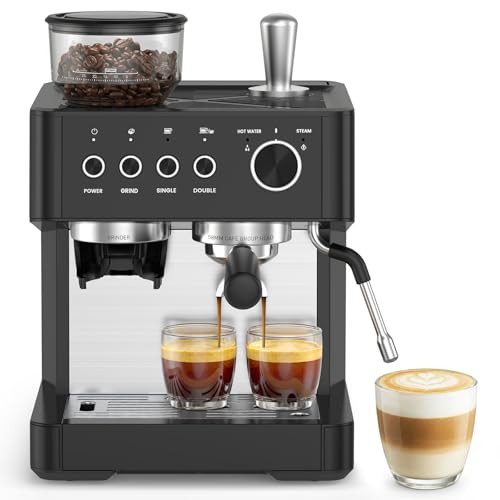
All-in-One with 30-Grind-Settings Burr Grinder - Featuring a fully integrated precision conical burr grinder with 30 adjustable settings (from fine to coarse), this coffee maker with grinder allows for precise calibration tailored to different coffee bean roasts, following the detailed grinding guide.

High Quality Stainless Steel: this milk frothing pitcher and latte art pen are made of #304 stainless steel. Well-made, rust-proof, stain-proof, heat-proof, and nontoxic. Dishwasher-safe, easy to clean and use.

STURDY & TOP QUALITY STAINLESS STEEL: The Milk Frothing Pitcher and Latte Art Pen are made of #304 STAINLESS STEEL. Well-made, rust-proof, stain-proof, heat-proof, and nontoxic. Dishwasher-safe, easy to clean and use.
Grind Fineness Impact
Grind fineness controls how water moves through your coffee puck, and that single factor determines whether your double shot pulls in a smooth 20–30 seconds or rushes through in half that time.
Your grind size directly sets your flow rate, so if you use finely ground coffee, you’ll slow the water and extend your seconds to brew. That extra resistance can leave your shot tasting bitter or astringent. Go too coarse, and water races through, often giving you sour, weak coffee.
Your grind fineness changes what you get per shot even with the same dose. Finer grinds limit output, while coarser ones increase it. Aim for about 1.6–2.0 oz in 20–30 seconds. If you’re off, adjust your grind, not just your timing.
Extraction Time Control
When you’re dialing in a double shot, extraction time is your most reliable guide, and grind size is the lever that moves it. Finer grounds resist water longer, risking bitter, over-extracted coffee, while coarser grounds let water rush through, producing sour, thin results. Aim for 20–30 seconds of extraction time control for your double shot.
Your coffee grinder makes this possible. Small adjustments change flow rate, timing, and flavor dramatically. If you see very little output, your grind’s too fine, choking the puck.
Measuring matters here. Unlike a single shot of espresso, your double uses 14–18 grams of coffee, so grind shifts affect yield in ounces. You’ll notice the difference in caffeine strength and balance. Stay consistent, watch the clock, and tweak gradually.
Do You Double the Water, the Coffee, or Both?
Pull a double shot, and you’re using about twice the coffee and twice the water compared to a single. You double both, not just one or the other.
Single vs double, the math stays simple. A single uses about 7–9 grams of ground coffee and yields roughly 1 fl oz. A double shot scales that up to 14–18 grams of ground coffee for about 2 fl oz out. You’re keeping the same ratio, just making more.
You might hear about a long shot or short shot, but those change the water, not the coffee dose.
To measure right, skip the ounces, and weigh your yield in grams instead. Crema throws off volume, so grams give you the real picture. You’ll get consistency every time.
Recommended Products

Premium Stainless Steel: Elevate your coffee ritual with our superior espresso shot cup. Made from top-grade 304 stainless steel, it’s engineered to combat rust and corrosion. The robust metal build promises long-lasting durability, ensuring it becomes a trusted staple in every coffee lover’s arsenal.

The capacity of 75ml allows you to fill 2 servings of espresso at one time. There are clear and accurate scales on the body of the espresso cups, ounces and milliliters, which can meet different needs and let you know the amount to add in each step.

Innovative Crema Removal: Experience a revolution in coffee purity. Our cup is equipped with an advanced crema removed system that removes over 90% of coarse crema, resulting in a cleaner, smoother, and more refined taste. Say hello to a coffee experience where every sip is a delight.
How Ristretto and Lungo Differ From a Standard Double Shot
Although a standard double shot gives you about 2 ounces of espresso, you can change the water to get very different drinks.
A standard double shot yields about 2 ounces of espresso, but adjusting the water transforms it into entirely different drinks.
A ristretto uses the same coffee dose but pulls less water, giving you roughly 0.5 fl oz per single portion. It’s thick, syrupy, and full of concentrated flavor.
A lungo does the opposite, running more water through the same grounds for about 1.5 fl oz per single shot. You’ll taste something milder and more diluted.
Picture honey slowly dripping from a spoon, that’s your ristretto, dark and dense. Imagine coffee-stained watercolors bleeding across paper, that’s your lungo, pale and stretched thin. See a standard double shot sitting at about 60 mL, balanced between the two extremes.
You control the final cup by adjusting water, not just the beans you grind.
Recommended Products

AN ESPRESSO GLASS ABOVE THE REST: Make your daily coffee break something truly special. With our double walled espresso mugs, watch your coffee float elegantly while enjoying a cool-to-the-touch feel. They keep your espresso piping hot, so you can sip slowly and enjoy the rich taste and aroma.

𝐀𝐂𝐂𝐔𝐑𝐀𝐓𝐄 𝐄𝐒𝐏𝐑𝐄𝐒𝐒𝐎 𝐌𝐄𝐀𝐒𝐔𝐑𝐈𝐍𝐆 𝐂𝐔𝐏: This 3 oz glass espresso shot cup features ml & oz markings for precise brewing. A must-have barista measuring glass for pulling consistent espresso shots, coffee drinks, or cocktail recipes.

PREMIUM BOROSILICATE GLASS: Made from high-quality, heat-resistant borosilicate glass that withstands temperature changes and daily use. Crystal-clear construction beautifully showcases your espresso's rich crema and color layers.
When to Pull a Shorter or Longer Double Shot
Two main choices face you when dialing in your double shot, and they depend entirely on what you want in your cup.
Pull a ristretto when you crave concentrated sweetness and thick body. You’ll use the same dose but less water, so your double shot shrinks to roughly 1.0 fluid ounce total. Each espresso is 1 fluid ounce or less in this style, giving you bold intensity.
Choose a lungo for something milder and thinner. Your serving size grows toward 1.5 ounces or more per side, stretching the same coffee with extra water. Watch your extraction time, since passing more water changes taste more than strength.
For steady results, adjust by coffee-to-water ratio, not just volume (ounces). Crema and grind shift your measured liquid, so chasing ounces alone misleads you.
Recommended Products

SNAPS ON SECURELY - Comes with 9 Neodymium magnets line the ring so it snaps flawlessly to your basket. The magnets are pressed to fit directly to the ring, and no glue is used

Easy Operation: Designed to hang directly on your coffee machine, this innovative accessory allows for hands-free use, making the coffee-making process more convenient and efficient.

BETTER BREWS - A well-made filter basket is fundamental to a good cup. Deliver better brews with more control and achieve high extraction to fully develop your coffee grounds

I've spent years obsessing over the details that make a house feel like a home — from the perfect bedding layers to a thoughtfully styled coffee corner. My focus is on modern, aesthetic home decor ideas that are beautiful, trend-aware, and actually achievable. Great style shouldn't require a big budget — just the right inspiration.
Follow on Facebook