
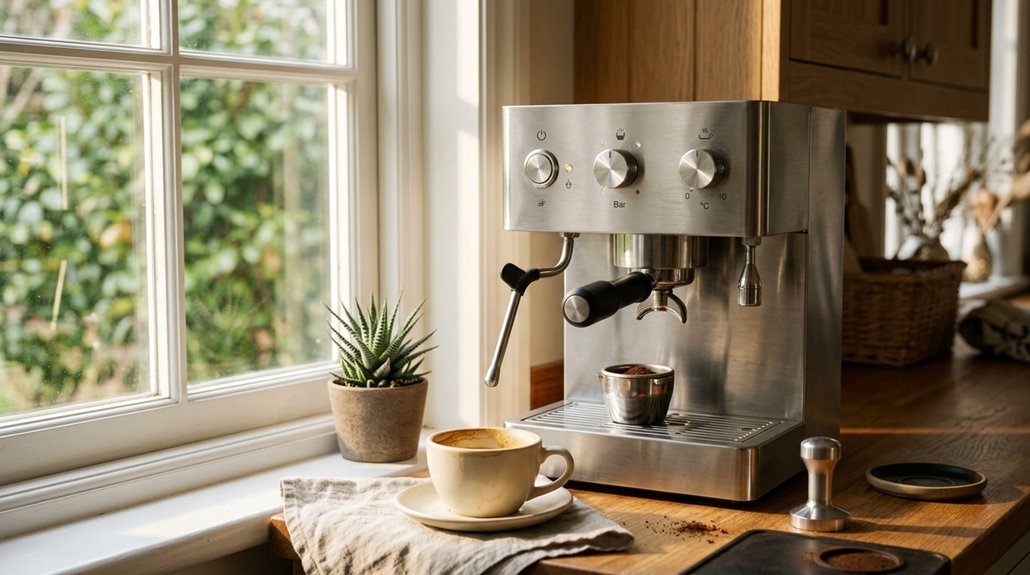


You want good espresso at home, so you start with your grinder budget, not the machine. Match them dollar for dollar, since uneven grind ruins shots even on pricey gear.
Temperature control matters more than marketing claims about pressure bars. You’ll need to decide if you steam milk often enough to justify two boilers.
The right choice depends on five factors most buyers overlook until it’s too late.
Who Needs an Espresso Machine vs. Capsule or Press
If you’re serious about making coffee at home, you first need to decide whether you actually want a full espresso machine or if a simpler option would suit you better.
Espresso machines give you true home espresso with around 9 bars of pressure and fresh grounds. A manual espresso machine teaches fundamentals, though you’ll wait between brewing and steaming. For easier temperature control, look for PID features rather than surfing temps yourself.
Capsule machines trade quality for speed. You’ll skip dialing-in and mess, but you’ll pay more per cup and miss fresh coffee’s range. If you drink mostly milk-based drinks, you can accept less critical extraction from basic pressurized systems. Choose based on whether you value ritual and taste, or speed and simplicity.
Recommended Products

Café-Quality Espresso with PID Temperature Control:Enjoy rich, balanced coffee at home with this advanced espresso machine. Featuring PID temperature control and low-pressure pre-infusion technology, this espresso coffee machine maintains precise brewing temperature for consistent extraction, helping deliver rich crema, smooth flavor, and café-style results in every cup. Whether you are a beginner or a coffee enthusiast, enjoy professional-quality espresso with confidence

Thermal Balance Brewing Head: Don't compromise on stability. The Gemilai G3006 Espresso Machine integrates an active PTC saturated head with PID digital control. This ensures precise water temperature from first shot to last, eliminating thermal loss for a consistently balanced flavor profile

190℉–201℉ Precision Temperature Control- Adjust brewing temperature from 190℉ to 201℉ to match different coffee beans and roast levels. Achieve balanced espresso with rich chocolate notes or bright fruity acidity—just like a professional barista.
Espresso Machine Budgets: Match Your Grinder Spend First
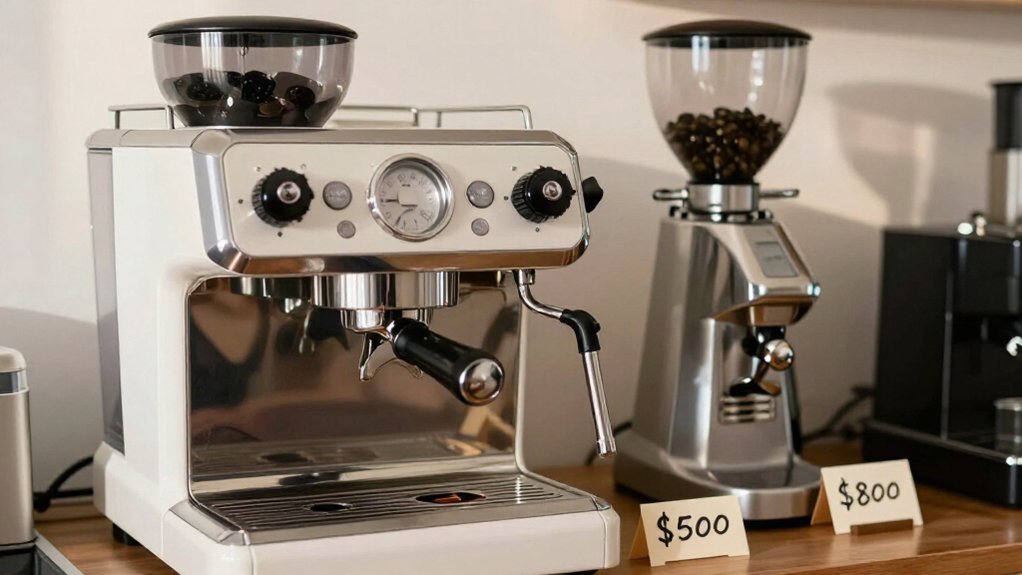
Before you shop for any espresso machine, you’ll need to lock in your grinder budget first. Don’t buy the machine and plan to upgrade the grinder later; your espresso quality depends on grinding fine and dialing in consistently at roughly 9 bars, not the machine alone.
If you’re looking at single-boiler starters around $850 to $1,800, plan enough total budget for a capable grinder with granular adjustments and a scale. An underpowered grinder will cap your shot pulls regardless of PID or preinfusion features, since you still need stable, real 9 bars, not marketing pump numbers.
For coffee at home on a tight budget, prioritize dollars for the grinder first, then pick machine features like temperature stability to match your workflow, especially if milk drinks will hide minor extraction flaws.
Recommended Products

DIRECT LEVER MANUAL ESPRESSO MACHINE - The Flair 49 PRO is an all manual, lever espresso machine, meaning that you are in control of your espresso extraction. All the force you put onto the lever is directly translated into your coffee making it easy to brew espresso to your exact tastes.
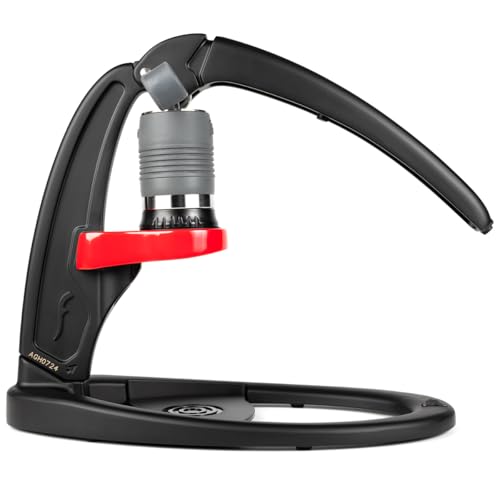
HANDCRAFT SHOTS OF ESPRESSO - With the Flair Espresso Maker, you have a complete manual espresso machine that can produce professional quality of espresso from your home, or wherever you are. Add 60ml of boiled water and a dose of up to 18 grams to yield a 40 ml shot with beautiful crema.
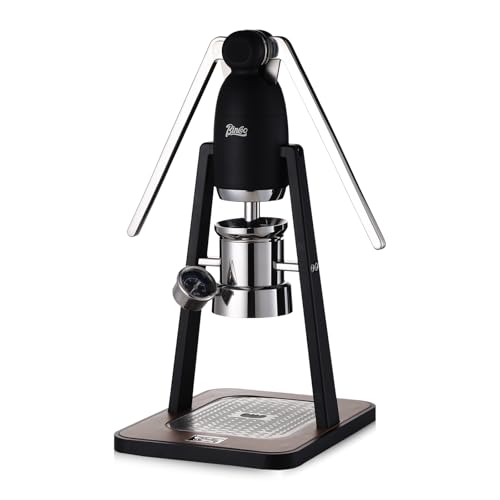
Precision 3-12Bar Pressure Control: The industrial dual-lever system with micro-adjustable pressure springs and 360° pressure gauge lets you professionally profile every shot, from gentle 3Bar pre-infusion to full 12Bar extraction.
Control Styles Ranked: Manual to Super-Automatic
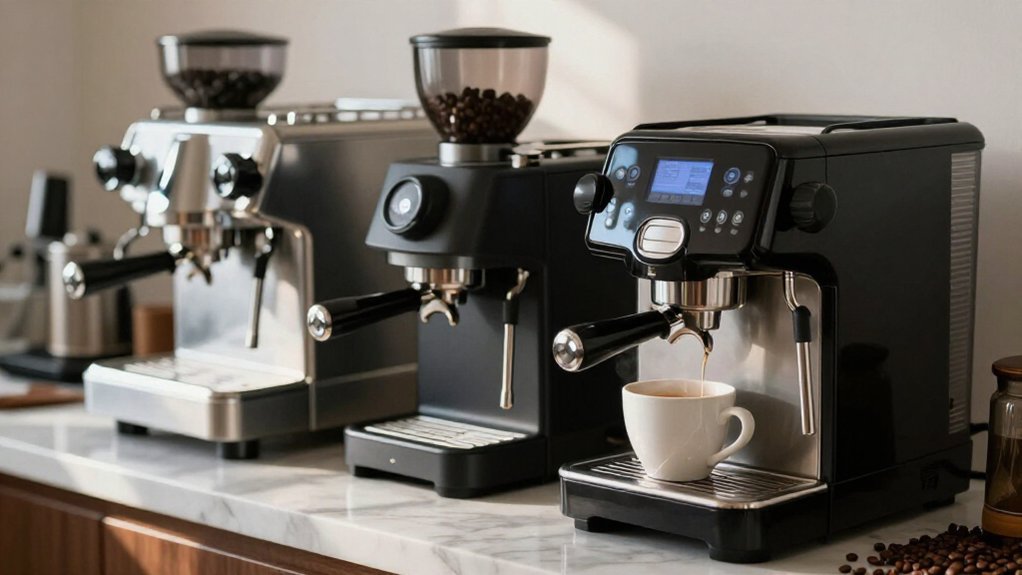
You face a clear choice between manual lever control and super-automatic ease when selecting your espresso machine. With manual levers, you’ll stand directly over your shot, building pressure by hand through each pull for total command over extraction. Super-automatic machines, however, let you push one button to handle grinding, tamping, brewing, and milk steaming, trading hands-on involvement for speed and consistency.
Recommended Products

Make Your Favorite Espresso Coffee At Home: The CASABREWS coffee machine with milk frother allows you to prepare all your favorite espresso-based coffees. You can enjoy a barista-brewed latte, cappuccino or macchiato at home. Stainless steel appearance, stylish and durable, ideal for any size kitchen. This compact espresso coffee maker is perfect for home or office use

Professional Pump: Come with 20 bar original Italian pump for easily extract strong flavored and rich crema espresso; Fast Heating: 1350 watts powerful boiler, preheating in just 30 secs, lets you make a delicious espresso in 1-3 mins
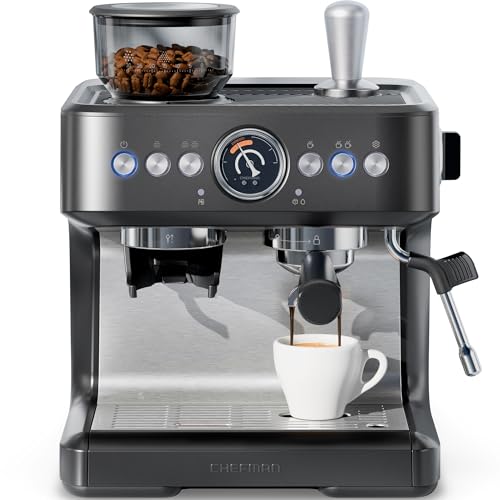
BARISTA-LEVEL ESPRESSO AT HOME: Brew rich, café-quality espresso with a semi-automatic design that grinds, brews, and delivers full flavor in minutes.
Manual Lever Control
Because you’re starting at the manual end of the spectrum, you’ll work with lever machines that build pressure through physical force rather than electric pumps. You’re controlling the flow rate with your own motion, making you part of the process in a way no other type of espresso machine offers.
This manual lever approach demands practice, since you’ll adjust pressure throughout each shot by feel and timing. You won’t find dual boiler vs single boiler choices here, most manual levers use single boilers or simple thermoblocks.
Your repeat shots take longer than pump machines, as you reset the spring and refill the chamber between pulls. Expect a steep learning curve, but you’ll gain full hands-on control when you master this craft.
Super-Automatic Ease
Manual lever machines put you in charge of every variable, but not everyone has time for that learning curve. If you want speed and simplicity, you’ll find super-automatic machines handle grinding, tamping, shot pulling, and milk steaming at the press of a button. You sacrifice some control over steam pressure and extraction timing, but you gain consistency, especially for milk-based drinks.
These machines are a strong choice for busy households, offices, or anyone who values convenience over hands-on craft. You won’t dial in the perfect shot like a pro, but you’ll still pull good espresso with minimal effort. Weigh your priorities: if ease matters most, super-automatic models deliver reliable results without demanding your full attention each morning.
Boiler Types That Determine Your Daily Workflow
You’ll need to decide which boiler setup fits your daily routine, since single boilers require waiting between brewing and steaming while dual boilers let you do both at once. Single-boiler machines run $850–$1,800 and suit straight espresso drinkers who don’t mind the pause.
Dual-boiler systems ($1,800–$7,900) remove temperature-scheduling hassles for back-to-back milk drinks. For those wanting full control without electronics, manual lever options offer a hands-on path, though they demand more skill and patience.
Recommended Products

#1 Worldwide Espresso Machine Maker* *Independent Research Institute, Sales Leader, Full Year 2025

Professional 20 Bar Pressure System - Italian pump delivers 20Bar high pressure for richer crema and bolder flavor than low-pressure machines, perfect for crafting café-quality espresso at home.

【One-Touch Creations & Large-Capacity】Craft your favorite café drinks in seconds with this fully automatic espresso machine—from creamy lattes and rich espresso to smooth Americanos. Designed for home coffee lovers, this automatic coffee machine combines convenience with capacity, featuring a 1.5L water tank and a 200g bean hopper.
Single Boiler Basics
If you’re just starting out with espresso at home, a single-boiler machine is often the most practical place to begin. Single boiler machines use one boiler for both brewing and steaming, so you’ll switch modes and wait between pulling shots and frothing milk. This pause lets you learn timing and technique without rushing.
You’ll pay around $850 to $1,800 for most models, making them the most budget-friendly boiler option. The boiler temperature must change between brew and steam needs, so you’ll use timing or flush routines to hit the right temperature again. A PID controller helps if your machine has one.
You’ll get less powerful steam than pricier systems. If you prefer straight espresso or occasional milk drinks, this workflow suits you fine. Frequent back-to-back drinks feel limiting, though.
Dual Boiler Benefits
With a dual-boiler machine, you’re getting two separate boilers, one for brewing your espresso and another for steaming milk. This setup lets you pull a shot of espresso and steam milk at the same time, so you’re not waiting around or switching modes.
Dual boiler machines typically cost between $1,800 and $7,900. You’re paying more because two boilers eliminate the temperature problems that slow you down with single-boiler units. When you’re making multiple drinks in a row, the brewing and steaming heat don’t fight each other.
The good and bad points are pretty clear: you get faster workflow and better espresso consistency, but you’ll spend more upfront. The Breville Dual Boiler shows this trade-off well, giving you strong steam power plus adjustable temperature control and programmable preinfusion for dialing in your shots.
Manual Lever Options
Pulling a shot with a manual lever means you’re the one building pressure by hand, so expect a slower, more involved routine than you’d get with an electric pump. Manual lever options demand more attention than commercial machines, but they reward you with direct control over every variable.
As a home barista, you’ll manage heat actively since many levers use minimal or no electric boiler. Some designs heat the brew head electronically, giving steadier temperatures without constant adjustment. Still, you control the shot through lever resistance and timing.
These machines suit espresso-focused users making one or two drinks. For consistent results, prioritize repeatable preheating, then dial your grind size to hit 25–30 seconds. Don’t chase pump specs; your hand pressure replaces them.
Skip Temperature Surfing: Why PID and Preinfusion Matter
While temperature surfing might seem like a quirky ritual, you’re really just wasting time and guessing at the right heat. A PID controller fixes this problem by holding the boiler steady at 90–96°C, so you pull shots without waiting or hoping.
Machines like the Rancilio Silvia often need aftermarket PID upgrades, but the Breville Bambino comes with one built in. That means you get reliable heat from the start, not drift that throws off your espresso.
Preinfusion matters just as much. It soaks the puck gently before full pressure hits, which cuts down on channeling and gives you even extraction. When your grind or tamping changes, steady preinfusion helps you spot what really changed the taste.
Look for both features, and you’ll skip the guesswork entirely.
Recommended Products

Compact and Mini Design: This coffee scale is mini in size, measuring 4.11x4.11x0.79 inches. It can be placed directly in the palm of your hand and can be easily placed on the coffee machine's water tray, leaving enough space to hold coffee cups. It is suitable for home coffee machines or small travel coffee machines.

【Ultra Small, Yet Professional】The Espresso Scale is small enough to fit in your palm. It measures 4.13*4.13*0.78 inches and weighs just 0.75 pounds. The coffee scale can work on most espresso machines and small pour-over coffee stands. It's easy to store and carry around, making it perfect for coffee lovers who like outdoor coffee.

【UPGRADED CLOG-CRUSHING GRIND PATH】Tired of grinder jams? Our upgraded system features a 20% wider polished chute + reinforced helical auger that EJECTS GROUNDS INSTANTLY – even with oily dark roasts! Enjoy mess-free grinding and barista-perfect shots every time.
Steam Power for Milk Drinks: Single vs. Dual Reality
If you drink lattes or cappuccinos, you need to think about steam power before you buy. A single boiler handles both brewing and steaming, so you’ll wait between modes and get gentler steam. A dual-boiler setup, like what La Marzocco uses, runs two boilers at once, giving stronger, more consistent steam for back-to-back milk drinks without the hassle.
At home, your milk drink habits decide what matters. Consider these points:
- Single-boiler machines cost less but force you to pause and schedule your workflow
- Dual-boiler systems steam faster, saving time during busy mornings
- Milk masks small extraction flaws, so single boilers work if you’re budget-constrained
- High-volume routines demand dual-boiler steam power for smoother performance
Pick based on your daily volume, not just brand prestige.
Recommended Products

【All-in-One Home Barista Experience】- This Spacekey espresso coffee machine combines a built-in conical burr grinder, a 20-bar professional pump, and a powerful steam wand. Go from whole beans to a perfect espresso, creamy latte, or refreshing iced coffee in minutes. Everything you need for a complete home café experience. Perfect for both beginners and enthusiasts.

44 Grind Settings & 0.1s Precision Dosing: Semi-automatic espresso machine with built-in conical burr grinder offers 44 grind settings and a 0.1-second precision timer, helping you control grind size and coffee dose more accurately for consistent flavor cup after cup.

PID control with fuzzy logic enhancement for the best stability control
Portafilter Size and Build Weight: What Lasts
Steam power might get the morning rush moving, but portafilter size and machine weight determine how long your setup stays reliable. You need to pick a portafilter size that fits your future plans, not just today’s budget.
Common entry points are 51 mm, found on machines like the Delonghi Stilosa, and 58 mm, used by the Gaggia Classic Pro, Rancilio Silvia, and Flair 58. The 58 mm path gives you more baskets, mods, and upgrade options than most 51 mm machines ever will.
Better build quality also shows up in heft: heavier machines resist warping through repeated tamping and locking cycles, while light, plastic-heavy units wear faster.
Check what basket ships in the box, too. Many US kits include pressurized baskets that limit you, so confirm you can switch to a non-pressurized basket for ground coffee that extracts properly. Prioritize real metal, stable bodies, and straightforward serviceability; your drip tray and daily routine will thank you.
Recommended Products

PORTABLE ESPRESSO: The Flair 2GO is a truly portable lever espresso maker. Weighing less than four pounds and fitting into a case that measures only 9.5in x 5.25in x 4in (253*135*104mm) the Flair 2GO fits into any suitcase or backpack.
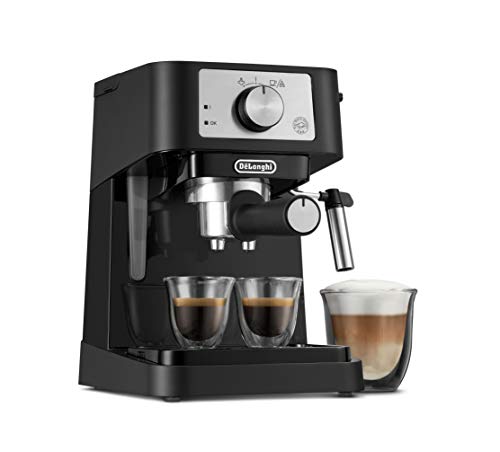
Please refer to user guide or user manual or user guide (provided below in PDF) before first use

【18~22% Gold Extraction Rate】 Make a cup of successful espresso needs to extract about 20% of the best flavor substances in coffee powder. STARESSO specialty coffee maker uses segmented hydraulic extraction to generate 15-20Bar pressure, allowing users to easily realize coffee machines Gold extraction, rich in fat and clear visible, becomes a coffee master in seconds.
Seven Espresso Machines Tested and Compared
The right espresso machine depends on what you’ll actually make each morning, not just what’s on sale. You need a machine that delivers stable 9 bars of pressure, not the misleading 15–20 bar marketing, plus temperature control in the 90–96°C range so your espresso brews at the correct heat.
The right espresso machine depends on your morning routine, not the sale price—prioritize stable 9 bars of pressure and precise temperature control over misleading marketing claims.
We tested seven machines for everyday reliability. The Bambino Plus excels at around $450–500, giving you easy milk drinks without fuss. For classic control with a solenoid valve and 58mm portafilter, the Gaggia Classic Pro remains solid, just avoid the 2024 EVO Pro update.
The Lelit Bianca offers external pressure adjustment and dual boilers built to last a decade or two. The Miicoffee Apex V2 provides adjustable PID, preinfusion, and over-pressure valve for dialing those 9 bars precisely.
- Check that your machine actually hits 9 bars measured, not just advertised
- Pair every pick with a capable grinder; this is non-negotiable
- Consider dual boilers if you make multiple milk drinks daily
- Manual options like Flair 58 trade convenience for control
Recommended Products

Fast Heating System for Less Waiting:800W heating system paired with a die-cast aluminum boiler reaches optimal brewing temperature in minutes, so you can enjoy fresh coffee quickly during busy mornings
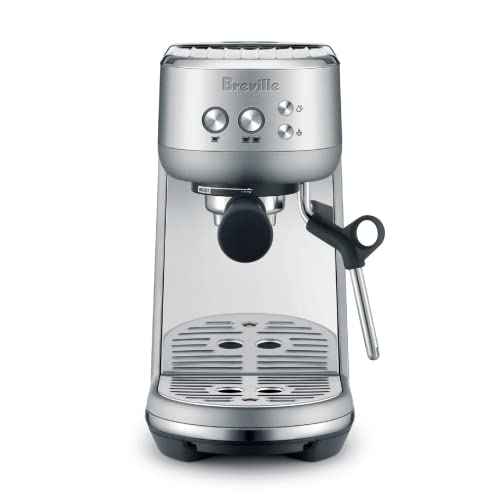
MICROFOAM MILK TEXTURING: Cappuccino maker and latte machine has an automatic steam wand allowing you to adjust milk temperature and texture, creating barista-quality microfoam for latte art at home

Make Your Favorite Espresso Coffee At Home: The CASABREWS coffee machine with milk frother allows you to prepare all your favorite espresso-based coffees. You can enjoy a barista-brewed latte, cappuccino or macchiato at home. Stainless steel appearance, stylish and durable, ideal for any size kitchen. This compact espresso machine is perfect for home or office use
Best Espresso Machines by Budget: $300, $700, $1,500+
Three clear budget tiers separate the machines worth your counter space from the ones you’ll outgrow in a year.
At the $300 price point, you’re choosing a machine with serious limits. Most options use pods or pressurized baskets that cut corners on flavor. You’ll get a fast cup of coffee, but not real types of espresso.
At $700, target a single-boiler semi-automatic like the Breville Bambino Plus. It has a PID and preinfusion for stable brewing. Remember, you’ll need a separate grinder budget here. The grinder often shapes your shot more than the machine itself.
Above $1,500, aim for dual boiler models when possible. They let you steam milk and pull shots together without waiting. Check our full review section for tested picks at each level.
Recommended Products

#1 Worldwide Espresso Machine Maker* *Independent Research Institute, Sales Leader, Full Year 2025

2026 UPGRADED DUAL-DISPLAY SYSTEM (PRESSURE & TEMP) - Upgrade your daily routine with this innovative espresso machine. Unlike standard models, this 20 bar espresso machine features real-time visual gauge displays for both extraction pressure and temperature. Whether searching for a high-precision espresso maker or a reliable coffee espresso machine, our dual-display system helps you monitor brewing conditions in real time to guarantee optimal crema and smooth flavor, making it one of the best expresso machines for home coffee lovers.
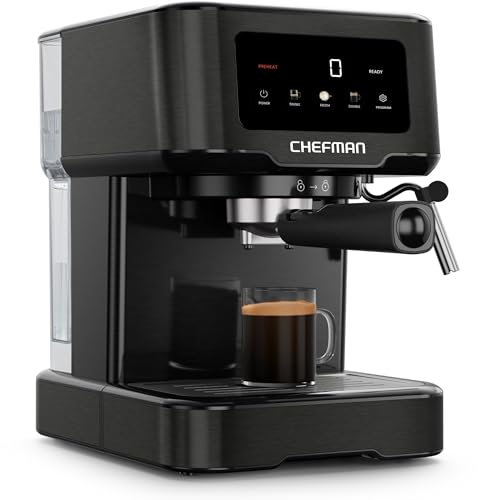
ENJOY CAFÉ-QUALITY ESPRESSO: Experience the bold, rich flavor of homemade espresso and skip long café lines with the CraftBrew Digital Espresso Maker! A strong 15-BAR pump and a built-in milk frother make it easy to brew cappuccinos and lattes right in your own kitchen.

I've spent years obsessing over the details that make a house feel like a home — from the perfect bedding layers to a thoughtfully styled coffee corner. My focus is on modern, aesthetic home decor ideas that are beautiful, trend-aware, and actually achievable. Great style shouldn't require a big budget — just the right inspiration.
Follow on Facebook