



Most parents don’t realize that a convertible crib’s conversion kit can cost $50 to $200 extra, and some brands discontinue kits after just a few years. You’re looking at a piece of furniture that spans 3 to 10 years of your child’s life, so the upfront price tag rarely tells the full story.
Before you buy, you’ll need to check whether the toddler rail, daybed back, and full-size bed rails are included, or if you’ll pay separately later.
The slats should sit no more than 2 and 3/8 inches apart, and the mattress base needs at least two height positions, ideally three.
Wood builds vary too. Solid hardwood lasts longer than composite or soft pine, which dents and loosens at the joints over time.
GreenGuard Gold certification matters more than you’d think: it limits chemical off-gassing in your baby’s breathing space.
Jpma certification adds another layer of verified safety testing beyond the basic federal requirements.
If you wait too long to buy the conversion kit, you might find it’s no longer manufactured, leaving you with a crib that can’t grow with your child.
Plan your purchases ahead, and you’ll avoid the frustration of a half-converted bed and a toddler who has outgrown the crib stage.
How Convertible Cribs Work
If you’re buying your first crib, you’ll want to understand how a convertible model grows with your child. A convertible crib is one that changes shape as your kid gets bigger, usually starting as a standard crib with four mattress heights. You’ll keep the mattress high for easy newborn access, then lower it as your child learns to stand.
Most switches need specific Conversion Kits, not universal parts, since guardrails, support slats, and hardware match your exact brand and model. When your child climbs out or hits height limits, often between 18 months and 3 years, you’ll install a toddler Bed Conversion Kit with rails and proper supports. Always follow the maker’s steps exactly, using only approved kits, so the bed stays secure through every stage.
Recommended Products

ONLY CRIB RAIL THAT FIRMLY ANCHORS TO BED FRAME WITH REINFORCED CLAMPS for 100% safety. Cannot slip out of place like other crib rails.

ONLY CRIB RAIL THAT FIRMLY ANCHORS TO BED FRAME WITH REINFORCED CLAMPS for 100% safety. Cannot slip out of place like other crib rails.

SAFE & SECURE CRIB BED RAIL: Designed for cribs only, this sturdy baby bed rail provides added protection for toddlers and young children. The 16-inch tall guard and 33-inch length help prevent nighttime falls while sleeping.
3-in-1, 4-in-1, or 5-in-1: Which Convertible Crib Grows With You?
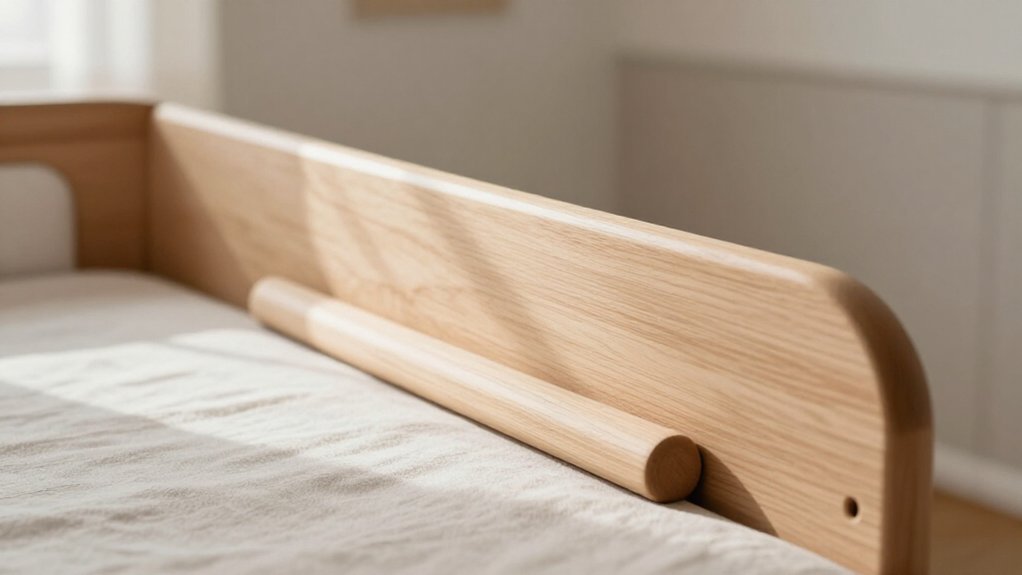
You’ll need to understand what the numbers mean before you pick a crib, since each label tells you how many stages your child can use. A 3-in-1 gives you crib, toddler bed, and daybed, while 4-in-1 and 5-in-1 models add full-size bed options that stretch into the teen years.
Compare the long-term value carefully, because extra stages cost more upfront and often need separate conversion kits you’ll buy later.
Recommended Products

TRUE 5-IN-1 VERSATILITY: The Synergy grows from a crib to a toddler bed, daybed, full-size bed with footboard, and full-size bed without footboard, five distinct stages. Toddler guardrail, stabilizer, and full-size bed rails sold separately.

TESTED & TRUSTED BABY SAFETY BRAND: Regalo bed rails have been trusted by parents for over 30 years. Certified by the Baby Safety Alliance, providing dependable protection for toddlers and young children during sleep.

【Upgraded Stability Design & Reinforced material】 Our toddler bed rail features a double-reinforced carbon steel frame and connectors for maximum stability. The extra-wide U-shaped base (4" wider than standard rails) provides superior weight support ensuring safety for your toddler.
Understanding the Numbers
When you’re shopping for a convertible crib, you’ll notice labels like 3-in-1, 4-in-1, or 5-in-1, and these numbers tell you exactly how many bed stages the crib will provide as your child grows.
A 3-in-1 typically covers crib, toddler bed, and daybed. A 4-in-1 or 5-in-1 adds full-size bed options, though you’ll need model-specific conversion kits to complete these later stages. These kits aren’t universal, so you’ll want to match by brand and model number for safety.
Most cribs include four adjustable mattress heights, letting you lower the mattress as your baby grows and climbs. If you want the longest use, a 5-in-1 offers more bed changes than a 3-in-1, but expect higher upfront costs and more parts to purchase later.
Conversion Stage Options
Because your child will sleep in the same bed for years, choosing between a 3-in-1, 4-in-1, or 5-in-1 crib shapes how long the furniture lasts and what you’ll spend later.
A 3-in-1 moves from crib to toddler bed to daybed, skipping the full-size option. A 4-in-1 convertible crib adds full-size bed capability, though you’ll need a separate conversion kit for that final step. A 5-in-1 includes extra rail configurations and guardrail stages for more flexibility.
Here is how to decide:
- Count how many years you want the same frame to remain in use
- Verify if your chosen 4-in-1 convertible crib includes the conversion kit or sells it separately
- Plan your crib to toddler bed switch around ages 2.5 to 5, watching for climbing or height limits
- Match every rail and kit to your exact brand and model, no substitutes
Conversions are not universal.
Long-Term Value Comparison
Several years of use from one piece of furniture sounds appealing, and that is exactly what a convertible crib promises. You get more life out of one purchase, stretching your dollars across childhood.
A 3-in-1 convertible crib takes you from crib to toddler bed to daybed, with guardrails usually included. You will likely need another bed soon after. A 4-in-1 or 5-in-1 adds bigger kid stages, so you replace furniture less often. For maximum value, 5-in-1 models keep the same base design through more growth stages, often reaching full-size bed when you buy the conversion kit.
You save money versus buying separate beds in sequence. Check that your exact model has compatible kits available; full-size conversions commonly need separate purchase. Higher-stage designs like Amalfi or Santorini extend your furniture lifespan into the big kid years.
Safety Certifications and Features to Require
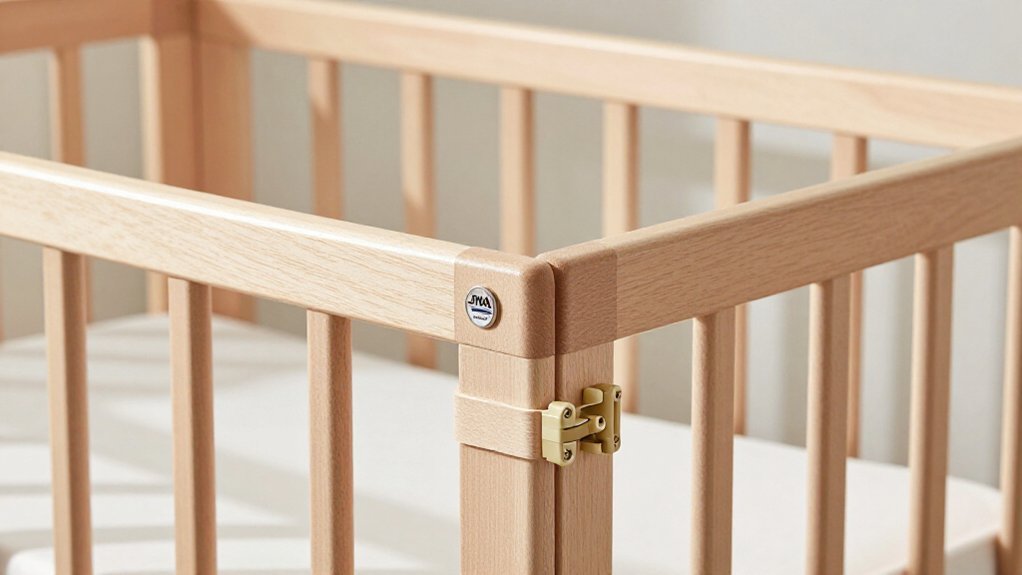
You should look for GREENGUARD Gold certification, which tests for over 10,000 chemical emissions, and check that the crib meets JPMA safety standards too. You’ll also want to confirm the slats are spaced no more than 2⅜ inches apart, and that the frame meets ASTM structural requirements for strength and stability.
These certifications and features aren’t just labels, they’re practical safeguards you’ll rely on every day.
Recommended Products

5-IN-1 CONVERTIBLE CRIB: Converts from baby crib (mattress sold separately) to toddler bed [Graco Universal Toddler Safety Guardrail Kit (01340-60x Series) sold separately], daybed, and full-size bed (Graco Full-Size Bed Conversion Kit sold separately)
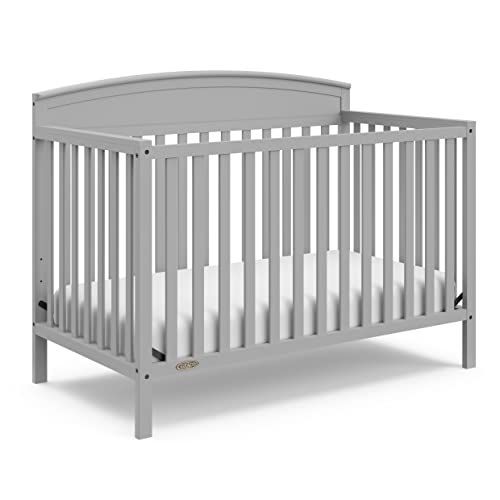
5-IN-1 CONVERTIBLE CRIB: Converts from baby crib (mattress sold separately) to toddler bed [Graco Universal Toddler Safety Guardrail Kit (01340-60x Series) sold separately], daybed, and full-size bed (Graco Full-Size Bed Conversion Kit sold separately)

CLASSIC, STYLISH DESIGN— VERSATILE, EASY-TO-MATCH STYLE: The Benton features classic lines, stylish details, and an easy-to-match versatile design making it the perfect addition to any nursery
GREENGUARD Gold Certification
Indoor air quality matters in a nursery, so you’ll want to check for GREENGUARD Gold certification when you’re crib shopping. This independent label means the crib releases fewer chemical fumes and VOCs, protecting your baby’s breathing space from day one.
When you’re choosing a convertible crib, this certification becomes even more important. You’ll use the same piece from crib to a toddler bed and beyond, so low emissions over years matter. Look for the GREENGUARD Gold badge on the exact model you’re buying, not just the brand name, since specific products get tested individually.
Here’s what to remember:
- Verify the badge appears on your exact crib model, not a similar line.
- Know that thousands of chemicals get tested for emissions.
- Understand this certification covers off-gassing in early months.
- Pair it with structural safety checks like slat spacing and mattress height.
JPMA Safety Standards
Alongside clean air, solid build quality keeps your baby safe, and that’s where JPMA certification comes in. You should look for the JPMA seal on any crib you’re considering, since it shows the crib meets strict testing for safety performance.
Check that the crib meets key safety standards, including slat spacing no wider than 2 3/8 inches and sturdy, secure construction. You’ll want a model built after 2011, when drop-side rails were banned, not an older, non-compliant design.
Verify the JPMA safety standards documentation matches your exact model and production batch before you buy. Do this again when purchasing conversion kits later. Ask about non-toxic finishes, and request GREENGUARD Gold certification for air quality, since JPMA covers physical safety while other credentials address emissions.
ASTM Structural Requirements
Because physical safety matters as much as air quality, you’ll want to check that any crib meets ASTM standards for structural performance. ASTM structural requirements cover how well the crib holds up under real use, not just how it looks in the store.
You’ll need to verify four key points:
- Confirm the model has no drop-side hardware, since those designs fail modern crib safety rules.
- Check that slat spacing measures no more than 2 3/8 inches to stop head entrapment.
- Inspect that the frame, joints, and hardware handle heavy loads without loosening.
- Make sure you can tighten all parts firmly, especially when attaching the toddler rail later.
Pair ASTM structural compliance with GREENGUARD Gold certification, and you’ll cover both physical durability and clean indoor air.
What a Convertible Crib Actually Costs (Including Hidden Expenses)
Before you buy a convertible crib, look past the sticker price on the display tag, since that number rarely tells the whole story. You’ll need a conversion kit for each stage change, especially when moving from crib to full-size bed, and those kits aren’t included in the base price. Toddler conversion kits run about $139–$189, while full-size kits cost around $189, so your total climbs fast.
You’ll also need a properly sized, firm crib mattress, sometimes a specific model made for that brand’s frame, which adds another expense right away.
Hidden expenses keep coming after each conversion. You’ll buy new guardrails, replace bedding sized for the bigger bed, and tighten hardware repeatedly to keep everything safe. Budget for these costs now, or you’ll face surprises later.
Recommended Products

GREENGUARD GOLD CERTIFIED: This crib meets the most stringent chemical emissions standards to create a healthier home for your baby. Tested for more than 10,000 chemicals and VOCs, this crib is certified to contribute to cleaner indoor air

CLEAN, CLASSIC DESIGN— VERSATILE, EASY-TO-MATCH STYLE: The Graco Benton 5-in-1 Convertible Crib with Drawer features clean lines, classic details, and an easy-to-match versatile design making it the perfect addition to any nursery

6-IN-1 CONVERTIBLE CRIB: Crib converts to a toddler bed, daybed, sofa, full bed with and without footboard (Daybed/Sofa Rail included; Toddler Guardrail #W100725 and Full Size Wood Bed Rails #0050 or standard bed frame for headboard only, sold separately)
When to Buy Your Conversion Kit
Once you’ve picked out your convertible crib, you’ll want to grab the matching conversion kit right away. These kits aren’t universal, they’re model-specific, so buying early ensures you get the right fit and finish.
Here’s why timing matters:
- You’ll convert to crib-to-toddler between 18 months and 3 years, so having the kit ready prevents delays when climbing starts.
- Your full-size bed (conversion kit) is often sold separately, and you’ll need it closer to ages 3–5.
- Buying with the crib safeguards you if colors or collections get discontinued later.
- You’ll maintain safe structural integrity by using only the manufacturer-approved kit for your exact model number.
Don’t wait until you need it. Stock your conversion kit now, and you’ll convert smoothly when the time comes.
Recommended Products

Material: Made from solid, sustainably sourced Beech wood from France, ensuring durability and longevity Design: Features rounded arches and a versatile style, making it a...
Conversion Mistakes That Shorten Your Crib’s Lifespan
Even if you’re careful with daily use, a few common missteps during conversion can quietly cut years off your crib’s usable life.
You compromise structural integrity when you use a conversion kit that doesn’t match your crib’s exact brand, collection, model, and finish. Always buy the manufacturer-approved kit for your specific model and manufacturing details.
Converting too early, before your child shows readiness cues like climbing out or height concerns, increases wear on hardware and shortens safe usability. The crib-to-toddler setup should only happen when your child can safely use the new stage.
You shorten lifespan when you skip tightening and inspecting all bolts and brackets after every conversion. Looseness develops over time, reducing longevity and raising safety risks as your child grows more active.
For full big kid bed transitions, don’t assume your crib converts without correct full-size rails and support components. Many cribs need a separate conversion kit, and wrong parts reduce lifespan.
Treat conversion as a recurring check, not a one-time install. Re-check fit, slat and rail alignment, and mattress height settings, often four-position adjustable, at each stage. This prevents premature wear and limits how long your crib stays safely usable.
Recommended Products

Smart 3-in-1 Convertible Crib - Designed to grow with your child, this crib transitions from a crib (mattress sold separately) to a toddler bed and full-size daybed (conversion kits sold separately). Built-in teething guards protect both your baby’s gums and the crib rails, ensuring durability and safe use through every stage.

ADDED BEDTIME SECURITY — Creates a protective barrier along the open side of the bed to help provide added security during the crib-to-toddler-bed transition.

ADDED BEDTIME SECURITY — Creates a protective barrier along the open side of the bed to help provide added security during the crib-to-toddler-bed transition.
Does a Convertible Crib Really Save Money?
A convertible crib can save you money if you plan ahead and use every stage it offers. Convertible cribs are designed to grow with your child, so you avoid buying new beds every few years.
Here is how the savings add up:
- One purchase covers crib, toddler bed, daybed, and sometimes full-size bed with a conversion kit.
- You buy only rails later, not a whole new frame.
- Adjustable mattress heights, usually 4 settings, let you use the same structure from newborn through toddler years.
- Models with included toddler guardrails cut extra costs.
The upfront price runs higher, but you skip repeated purchases, delivery fees, and setup hassles. Factor in the conversion kit cost early, and you’ll see how a convertible crib can save you money over time.
Recommended Products

CRIB COMPATIBILITY GUIDE...continued...(w/ 53.25" Slats): Fairmount, Fall River, Fancy, Farmhouse, Fernwood, Finley, Fontana, Foundry, Franklin, Gramercy, Greyson Signature, Hanover, Harbor, Hartley, Haven, Juliette, Kingsley, Kingswood, Lancaster, Langley, Layla, Logan, Luna, Mason, Mercer, Mid-Century, Middleton, Monterey, New Haven, Oakmont, Oxford, Paloma, Perry, Peyton, Phoebe, Providence, Ravello, Remi, Remy, Richmond, Riverside, Rowen, Skylar, Slumbertime Madisson, Solutions…continued…

CRIB COMPATIBILITY GUIDE...continued...(w/ 53.25" Slats): Fairmount, Fall River, Fancy, Farmhouse, Fernwood, Finley, Fontana, Foundry, Franklin, Gramercy, Greyson Signature, Hanover, Harbor, Hartley, Haven, Juliette, Kingsley, Kingswood, Lancaster, Langley, Layla, Logan, Luna, Mason, Mercer, Mid-Century, Middleton, Monterey, New Haven, Oakmont, Oxford, Paloma, Perry, Peyton, Phoebe, Providence, Ravello, Remi, Remy, Richmond, Riverside, Rowen, Skylar, Slumbertime Madisson, Solutions…continued…

HOOK-ON KIT CRIB COMPATIBILITY GUIDE (w/ 53.75" Slats): Compatible with Ashton, Beaumont, Bradley, Cascade, Chandler, Cottage Cove, Crestwood, Dallas, Elizabeth, Ellison, Emily, Essential 4-in-1, Everlee 4-in-1, Galloway, Glenbrook, Grandville, Hamilton, Hampton, Hanover, Harlow, Holland 4-in-1, Imperial, Kendra, Kenilworth, Langston, Lexington, London Lane, Manchester, Mayfield, Mid-Century Claremont, Mystic, New Haven, Park Ridge, Phoenix, Piermont, Promenade Park, Rhinebeck...continued…

I've spent years obsessing over the details that make a house feel like a home — from the perfect bedding layers to a thoughtfully styled coffee corner. My focus is on modern, aesthetic home decor ideas that are beautiful, trend-aware, and actually achievable. Great style shouldn't require a big budget — just the right inspiration.
Follow on Facebook