
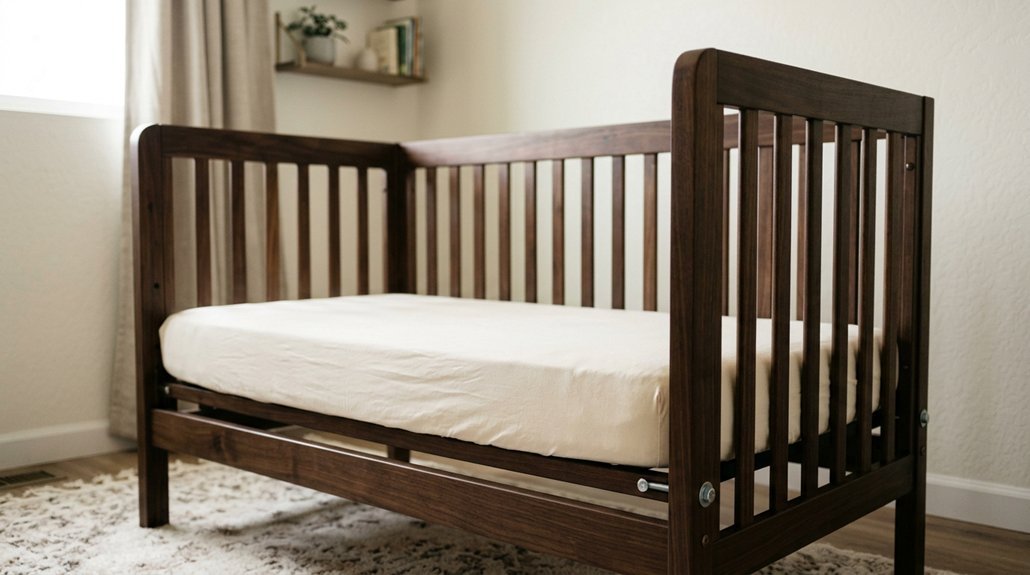


Your baby’s crib is a bridge between helplessness and independence, and you control when that bridge tilts. You lower the mattress at sitting, not standing, because falls happen in the gap between skills.
You check the rail reaches chest height, about 26 inches from the lowered mattress, and you switch beds when rails drop below mid-chest, roughly 35 inches. These numbers aren’t suggestions; they’re the guardrails that keep the bridge steady while your child crosses.
Start Newborns on the Highest Mattress Setting
When you first bring your newborn home, you’ll want to set the crib mattress at its highest position. This mattress height makes daily care easier, since newborns can’t yet sit or pull themselves up.
Set your newborn’s crib mattress at the highest position—daily care is easier before they can sit or pull up.
You’ll need a firm, tight-fitting mattress with no gaps at the edges. Soft or loose fits create entrapment and suffocation risks you can’t afford.
Use only a snug fitted sheet. Skip pillows, quilts, comforters, sheepskins, and bumper pads; these add dangerous padding to the sleep space.
Always place your baby on their back on the bare mattress. If you use a blanket, tuck it thin around the mattress, covering only to chest height.
These Crib Safety: Tips support safe sleep from day one, giving your newborn a secure start.
Recommended Products

【♚♚】Material: Metal;【♚♚】Quantity: 100pcs;

Spring-Loaded Height Adjustment: This spring loaded latch pin is designed to help adjust baby bed and toddler bed height as your child grows, making it a practical baby bed adjustable height rod for everyday furniture use
Lower the Crib Mattress the Moment Your Baby Sits Up
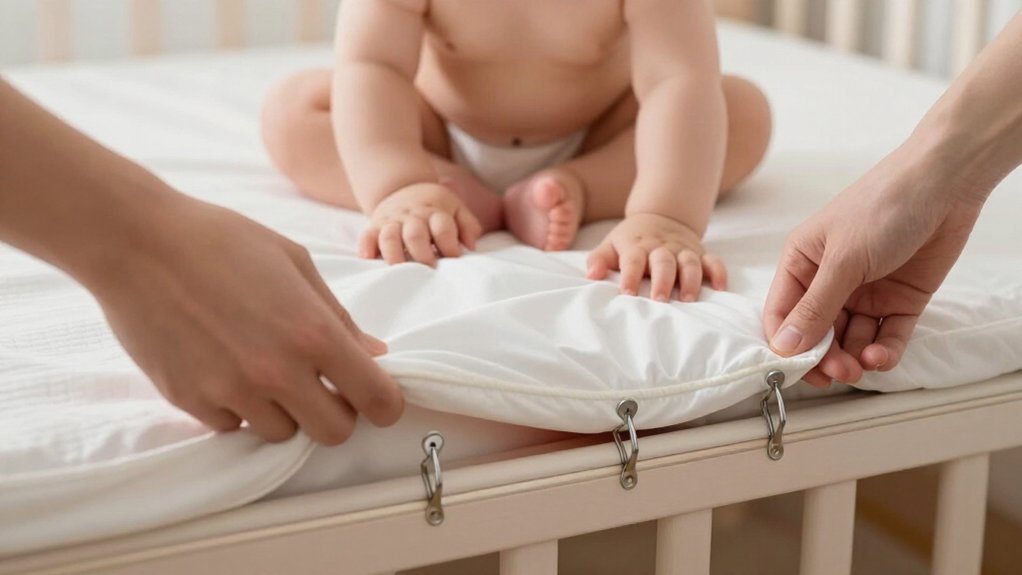
Your newborn’s days on the highest mattress setting are numbered. You need to lower the crib mattress the moment your baby sits up independently, no matter your baby’s age and motor timeline.
- Watch for independent sitting, that wobbly milestone when the lowest setting becomes the safest position.
- Don’t wait for pulling or standing, because reaching and grabbing starts sooner than you’d expect.
- Drop the mattress to the lowest level immediately, even if your crib has multiple height options.
- Check the rail height once you’ve lowered it, aiming for mid-chest or nipple level to stop forward tipping.
Your baby’s heavy head makes falls especially dangerous. Lower the crib mattress proactively, not reactively, and you’ll remove one major worry from your list.
Recommended Products

Purely premium quilted fitted knitted cover: quilted fitted & soft, different patterns available for choice, soft and breathable.

DESIGNED FOR DEEPER, SAFER SLEEP. Because your baby’s comfort is more than just rest. It’s development, bonding, and peace of mind from the very first night. The Little Dreamer crib mattress promotes healthy sleep with a hypoallergenic cover and supportive materials designed to cradle your infant securely.

【PRECISION FIT & NO GAP GUARANTEE】 Precisely measured at 38" x 26" to ensure a snug, gap-free fit for standard portable playards. Our reinforced edge design eliminates spaces between the mattress and the rails, guaranteeing that tiny limbs won't get stuck, giving you ultimate peace of mind throughout the night.
Switch to a Toddler Bed When Rails Fall Below Mid-Chest
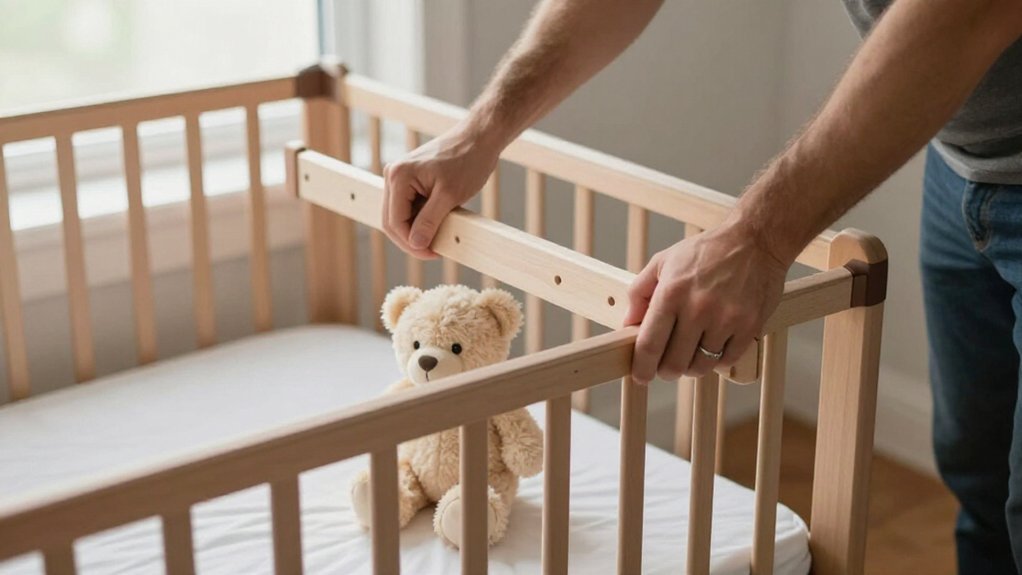
Since crib rails don’t grow with your child, you’ll eventually face the day they drop below mid-chest height, usually around 35 inches for most standard cribs. The American Academy of Pediatrics marks this point as your signal to change. Once the crib rail sits below your child’s mid-chest height, climbing and toppling risks spike sharply.
Measure your specific rail against your child’s body. Don’t rely on age alone. If you’ve kept the mattress at its lowest setting since independent sitting began, reassess now.
Waiting too long invites sleep struggles and dangerous climbing attempts. Make the move to a toddler bed promptly when rails fall short. Your child’s safety depends on timing this change right, so watch that height marker closely.
Recommended Products

PERFECT FIT: The crib sheet measures 52" X 28" X 8". The elastic bandage wraps around to ensure that our crib mattress sheets fit your crib mattress snugly, not loose, but flat, giving your baby a comfortable bedding.

Whimsical Sheets: This floral prints themed 4 pack crib sheet set in charming palette of warm pink, beige, and tan, complemented by solid pink options in coordinating hues is the optimal start for your baby girl.

100% Organic Cotton: Keep your newborn perfectly comfortable all night. 100% GOTS certified fabric acts as a soothing layer against delicate skin. These breathable baby bed sheets help prevent overnight discomfort and sweat.

I've spent years obsessing over the details that make a house feel like a home — from the perfect bedding layers to a thoughtfully styled coffee corner. My focus is on modern, aesthetic home decor ideas that are beautiful, trend-aware, and actually achievable. Great style shouldn't require a big budget — just the right inspiration.
Follow on Facebook