
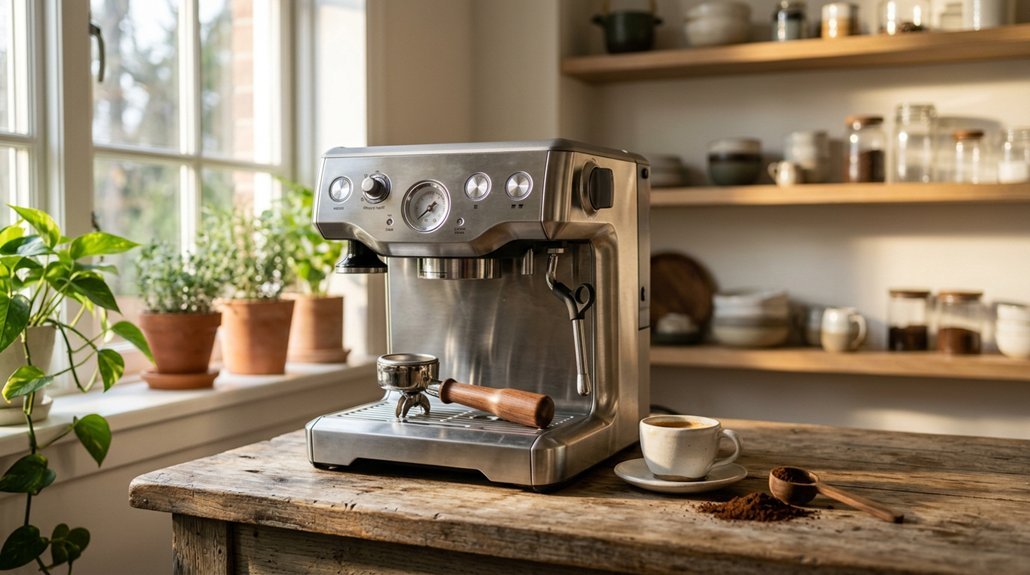


Like learning to drive a stick shift, pulling your first espresso shot feels tricky until your hands learn the rhythm. You’ll warm the machine for 20 to 30 minutes, grind 18 grams of fresh coffee very fine, tamp with firm pressure, and aim for 36 grams out in 25 to 30 seconds.
But the real test comes when your shot runs too fast or too slow, and you must fix it on the fly.
Pull Your First Espresso Shot: Step by Step
Before you pull your first shot, you’ll need to get your machine ready, and that means warming it up for 20 to 30 minutes so the water reaches the right temperature. Purge the group head with a short burst of hot water, then insert a clean portafilter into the group head until it seals properly.
Grind fresh coffee very fine, and dose about 14 to 21 grams into the portafilter basket. A common double-shot baseline is about 18 grams. Distribute the ground coffee evenly, then tamp firmly and level with about 30 pounds of pressure. Wipe the rim to avoid leaks, and lock the portafilter in place.
Use the 2:1 ratio as a baseline, so 18 grams in should yield about 36 grams out. Begin brewing, and the shot should take about 25 to 30 seconds with rich crema. Stop at the target time, then serve immediately.
Recommended Products

Make Your Favorite Espresso Coffee At Home: The CASABREWS coffee machine with milk frother allows you to prepare all your favorite espresso-based coffees. You can enjoy a barista-brewed latte, cappuccino or macchiato at home. Stainless steel appearance, stylish and durable, ideal for any size kitchen. This compact espresso coffee maker is perfect for home or office use

2026 UPGRADED DUAL-DISPLAY SYSTEM (PRESSURE & TEMP) - Upgrade your daily routine with this innovative espresso machine. Unlike standard models, this 20 bar espresso machine features real-time visual gauge displays for both extraction pressure and temperature. Whether searching for a high-precision espresso maker or a reliable coffee espresso machine, our dual-display system helps you monitor brewing conditions in real time to guarantee optimal crema and smooth flavor, making it one of the best expresso machines for home coffee lovers.

【Professional Espresso & Cappuccino Maker】 Brew barista-quality espresso and create creamy cappuccinos and lattes easily with the built-in steam wand. This espresso machine is perfect for making Italian coffee maker-style drinks right at home.
Adjust Your Grind to Fix Fast or Slow Shots
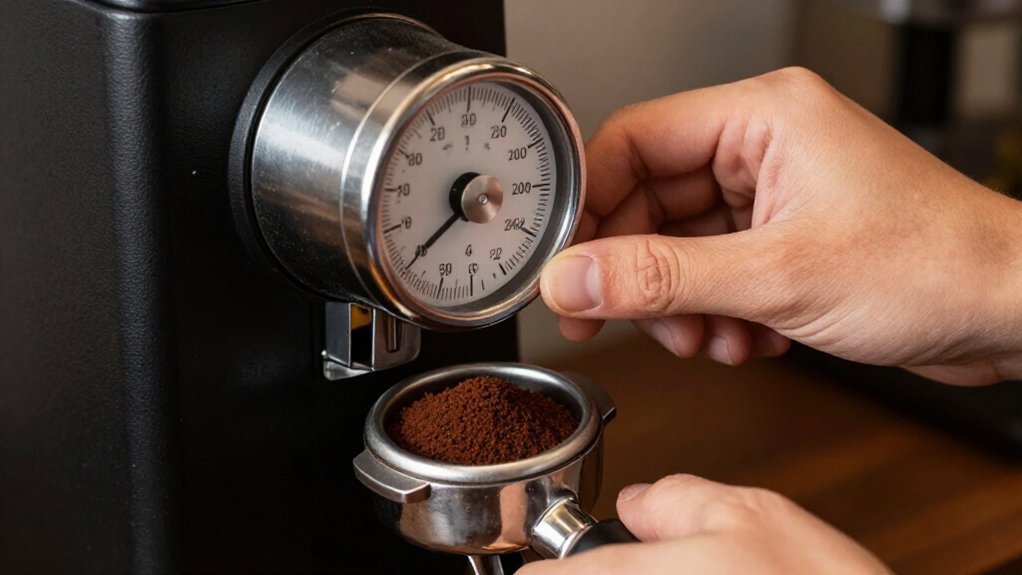
Your first shot probably won’t be perfect, and that’s normal.
If your shot flows too fast, under ~25 seconds, your grind is too coarse. Switch to a finer grind and try again. If it flows too slow, over ~30 seconds, your grind is too fine. Switch to a coarser grind and pull another shot.
Keep your dosing steady, around 18 g for a double, so timing changes come from grind size alone. Espresso machines push hot water through the coffee bed at high pressure, so even small adjustments change flow rate. Evenly distributed, finely ground coffee slows extraction, while coarser coffee speeds it up.
Adjust in tiny steps, re-test each time, and aim for ~36 g out in ~25–30 seconds for a balanced 2:1 ratio.
Recommended Products

40 EXTERNAL ADJUSTABLE GRIND SETTINGS - Unlike traditional grinders with internal adjustments, our manual coffee grinder offers 40 precise external settings. The easy-to-use adjustment ring lets you select your perfect grind level, broadening your coffee flavor options without the mess of stray grounds. Perfect for espresso, pour-over, French press, and more.

ONE GRINDER. ANY BREW. – Opus 2 is built for coffee lovers who brew more than one way, from espresso to pour-over, French press, and cold brew. Cappuccinos in the morning, pour-over in the afternoon, cold brew on the weekend.
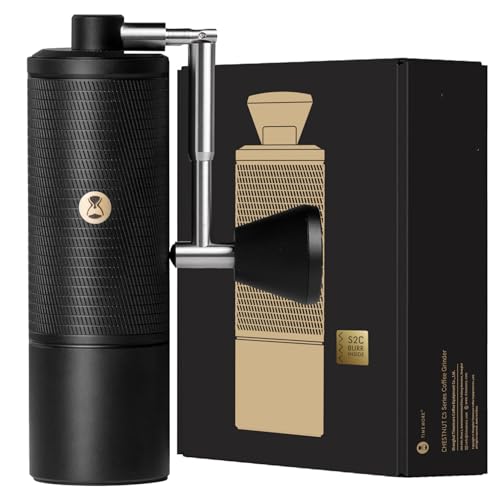
[ What is C5 Pro Coffee Grinder? ] Equipped with patented S2C-042-III stainless steel burrs with higher precision and efficiency. Hand coffee grinder provides more precise grinding adjustment, minor adjustment of 0.031mm per click allows you to easily achieve the perfect coarseness for your preferred fine to coarse. From French press to espresso coffee, TIMEMORE has you covered
Diagnose and Fix Common Shot Problems
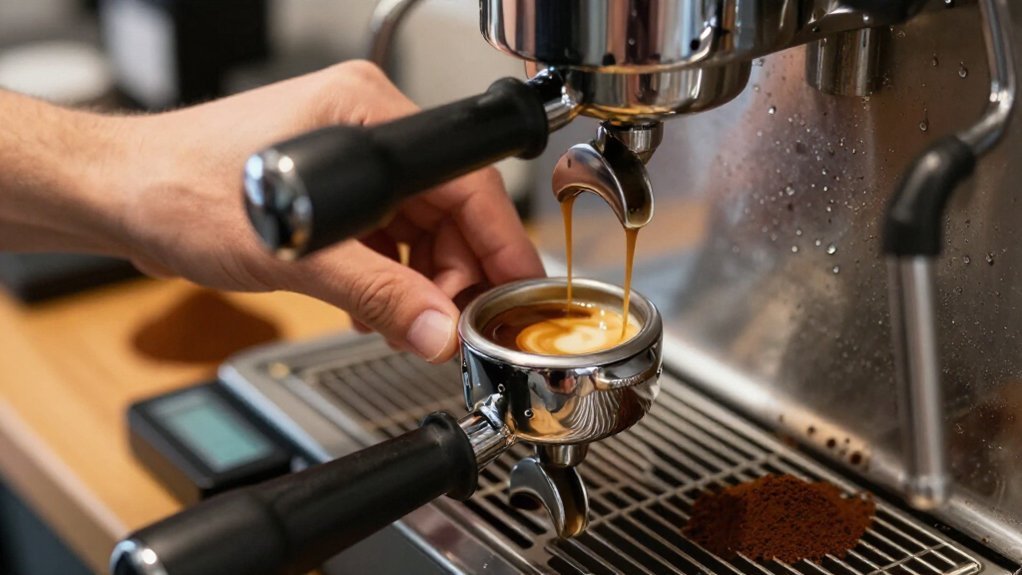
When a shot goes wrong, you’ll usually taste it right away. If your coffee tastes sour or the shot runs too fast, under ~25 seconds, grind finer or dose more. Your coffee grinder controls this, so adjust it and test again.
If the shot runs too slow, over ~30 seconds, grind coarser or reduce dose. Weak crema means stale or preground beans, so grind fresh and keep size steady.
Check your filter basket and portafilter locks for gaps that cause channeling. Use even pressure to compact the coffee grounds, about 15-20 kg, and level the puck first. Don’t overfill the basket.
Standardize your dose at ~18 g in, ~36 g out. Stop each pull at the same weight for consistency. Clean the group head regularly, and avoid the steam wand area for now.
Recommended Products

DOUBLE SHOT PRECISION BASKET: A non-pressurized 54mm basket built for a 16 to 18g dose, so your recipe and your basket finally agree. Stainless steel, dishwasher safe, and thin-walled so it drops into the portafilter without forcing.

THICK CREMA WITH ANY BEANS, EVEN PRE-GROUND — The dual-wall pressurized design builds the pressure for you, pulling rich, café-style crema even with supermarket or pre-ground coffee and an imperfect grind. No barista skills, no fussing over grind or tamp — just easy, consistent double shots every morning.

Compatible with BES450 the Bambino, BES500 the Bambino Plus, BES810 the Duo-Temp Pro, BES840 the Infuser, BES860/BES870 the Barista Express, BES876 the Barista Express Impress, BES878 the Barista Pro, BES880 the Barista Touch, BES881 the Barista Touch Impress (See chart below)
Use the Steam Wand for Cappuccinos and Lattes
Now that you’ve got your espresso shots running well, it’s time to turn your attention to milk. You’ll steam milk to create the creamy texture that defines cappuccinos and lattes.
Perfect espresso is only half the craft—the magic happens when silky steamed milk transforms your shot into something extraordinary.
- Fill a stainless milk pitcher about one-third full with cold milk, then select steam mode and wait until the wand is ready.
- For frothing, position the wand tip just below the surface to add gentle air, then submerge slightly deeper to continue steaming.
- Stop when you reach 55–65°C, once the milk turns glossy and thick with fine microfoam.
- Purge the steam wand briefly, wipe the tip clean immediately, then pour steamed milk into your espresso.
Hold the pitcher close at first, then raise it to blend microfoam for smooth cappuccinos or creamy lattes.
Recommended Products

CONSISTENT PRESSURE EVERY TIME:Achieve perfectly even tamping with a built-in spring-loaded mechanism. Delivers consistent pressure without guesswork, reducing channeling and improving espresso extraction quality

Selected Espresso Tamper Kit: A professional espresso tools barista set, including 1 x 51mm calibrated espresso tamper, 1 x espresso stirrer, 1 x coffee tamper silicone mat, these barista accessories allow you to enjoy a wonderful "Italian Moment"
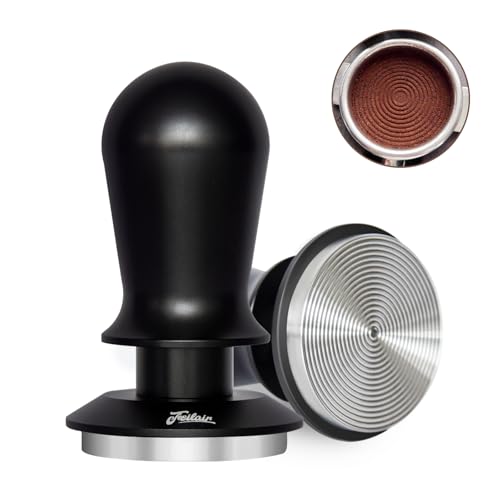
SPRING LOADED TAMPER FOR CONSISTENT 30LB PRESSURE: Delivers a precise, calibrated 30-lb force every time. The internal spring mechanism ensures uniform compaction, taking the guesswork out of espresso preparation
Clean Your Espresso Machine for Longevity
Because a clean machine makes better coffee and lasts longer, you’ll want to build quick habits into every session. After each use, backflush the group head using a blind filter and an approved detergent to remove old coffee oils and residues that degrade flavor and performance. Wipe and purge the steam wand immediately after steaming so milk proteins don’t bake on and cause inconsistent texture or taste later.
Clean your espresso machine weekly by brushing the shower screen and group head to clear trapped grounds and maintain even water distribution. Rinse and soak the portafilter and baskets regularly to prevent clogged oils and leakage that lead to channeling and weak, bitter shots. Inspect gaskets weekly for wear.
Empty and clean the drip tray daily, and wipe exterior surfaces to prevent odors and messy workflow.
Recommended Products

Compact and Mini Design: This coffee scale is mini in size, measuring 4.11x4.11x0.79 inches. It can be placed directly in the palm of your hand and can be easily placed on the coffee machine's water tray, leaving enough space to hold coffee cups. It is suitable for home coffee machines or small travel coffee machines.
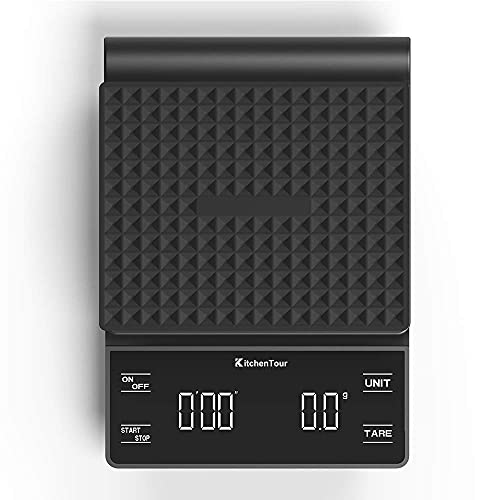
PRECISE MEASUREMENT & WIDE RANGE: KitchenTour EK6002 defines the latest in precision weighing technology with a weight capacity from 0.3g - 3000g to help you measure and get an exceptional cup of coffee with refined accuracy

PERFECTLY for DRIP TRAY: The slim espresso scale can fit perfectly on the drip tray of most coffee maker. The Brewing scale's dimensions are 4 7/8 x 2 7/8 x 3/4 inches, stainless steel weighing platform is 3 x 2 1/2 inches. The tiny scale increment is 0.1 grams so that you can dial in on a shot of espresso

I've spent years obsessing over the details that make a house feel like a home — from the perfect bedding layers to a thoughtfully styled coffee corner. My focus is on modern, aesthetic home decor ideas that are beautiful, trend-aware, and actually achievable. Great style shouldn't require a big budget — just the right inspiration.
Follow on Facebook