
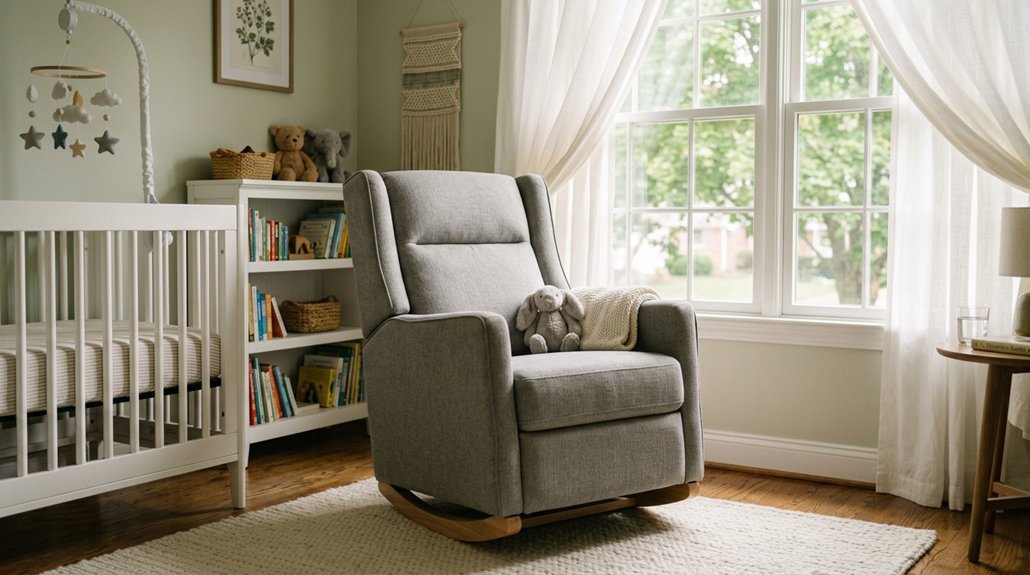


You need a chair that moves with you, not against you. A glider recliner slides forward and backward on a fixed track while you lean back, lifting a footrest as the backrest lowers.
You control it with a side lever or a power button, depending on the model.
Most seats measure 20 to 22 inches wide, with footrests extending 18 to 24 inches, and frames hold 250 to 350 pounds.
You’ll find fabric, microfiber, or leather upholstery, often with padded armrests and lumbar cushions.
The smooth motion differs from a rocker, which pivots in an arc, and from a stationary recliner, which doesn’t glide at all.
Before you buy, you’ll want to know which type fits your space, your budget, and your body.
How Glider Recliners Work: Reclining Plus Smooth Gliding Motion
When you settle into a glider recliner, you’re getting two motions in one chair. Glider Recliners combine a full recline with a smooth gliding mechanism that lets you move forward and backward without effort.
You control the recline with a side lever on manual models, or you press a button on electric versions. The backrest lowers while the leg rest lifts, giving you laid-back comfort. The gliding mechanism runs along a fixed track, creating a rhythmic motion that stays gentle and predictable.
Some chairs swivel 270 or 360 degrees, so you can turn without standing. Electric models offer smooth, low-jolt adjustments, and many include USB charging. Manual versions need you to push or pull to recline, keeping things simple and direct.
Recommended Products

LUXURIOUS MOTION COMFORT - Experience smooth 360-degree rotation and a gentle rocking motion in this swivel rocker recliner, featuring a deep 22.75-inch seat and durable and comfortable cushions for supportive lounging

【Swivel and Rocking】Our swivel recliner has a black metal base that allows for a smooth and gentle 270 degree swivel, and the features of rocking also make you feel more comfortable. It has passed a rigorous 25,000-cycle life test ensures stability and guarantees a secure and comfortable rocking experience

Excellent Solution for Nurseries And Living Room - This recliner chair put the idea-centered” into basic practice of “humanized design”. You can fully relax yourself in this magic nursery glider chair.
Glider Recliners vs. Rocker Recliners: Understanding the Mechanism Difference
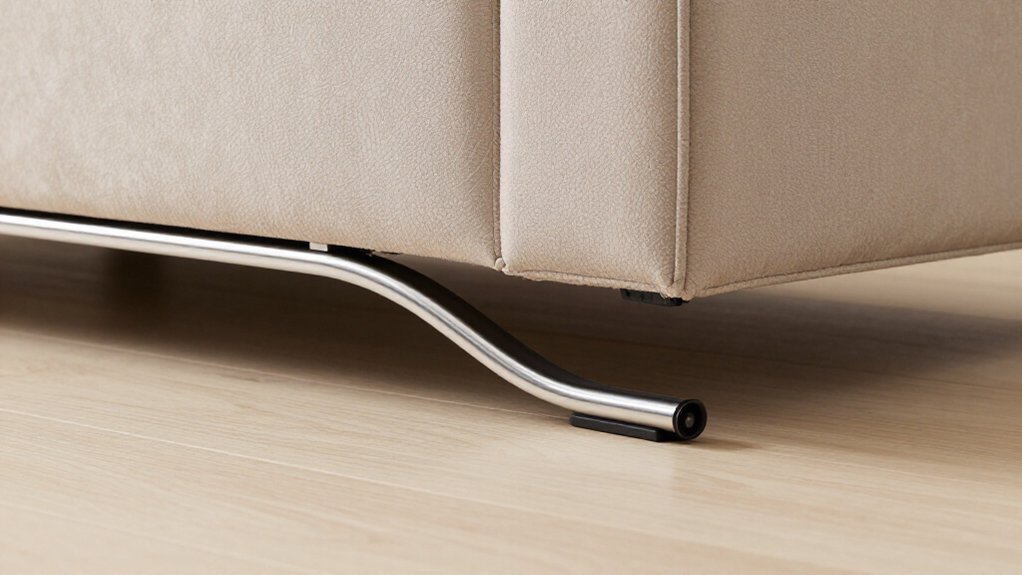
Glider recliners and rocker recliners might look similar at first glance, but they move in completely different ways. When you sit in a Glider Recliner, you slide back and forth along a built-in linear track. This creates a smooth, flat glide rather than an arc. A rocker recliner pivots on curved legs, giving you a rocking motion that arches up and down.
You will notice the Glider Recliner feels gentler and more controlled. The track supports your movement, so you use less force to keep going. Many models let you recline with the footrest out while you still glide. If you choose a Swivel Glider, you can turn 360 degrees without stopping the glide.
A manual recliner with gliding motion keeps everything on that track. Rockers depend on their base shape for intensity. Pick based on which movement fits your space and comfort needs.
Recommended Products

360° Swivel & Smooth Gliding: Equipped with enclosed metal ball bearings, this recliner chair offers a full 360-degree swivel rotation for effortless movement in any direction. The sturdy swivel base ensures smooth, quiet gliding—perfect for multitasking or keeping an eye on your little one

Compatible with Chevrolet Traverse 2018-2023; Malibu 2016-2024; Equinox 2018-2024; Cruze 2016-2019
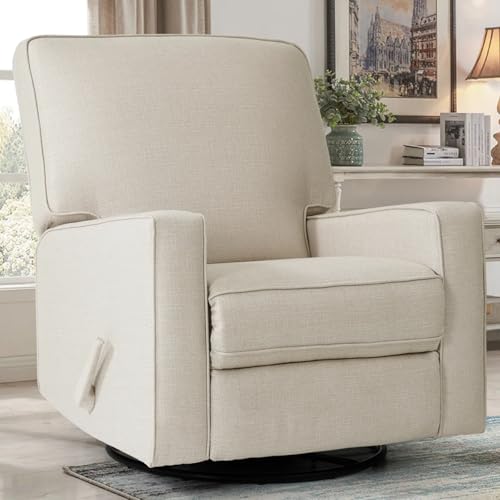
【360° SWIVEL & GENTLE ROCKING】: Smooth swivel and relaxing rocking motion create a cozy seating experience for nursery feeding, reading, watching TV, or relaxing in the living room or bedroom.
How Glider Recliners Differ From Standard Stationary Recliners
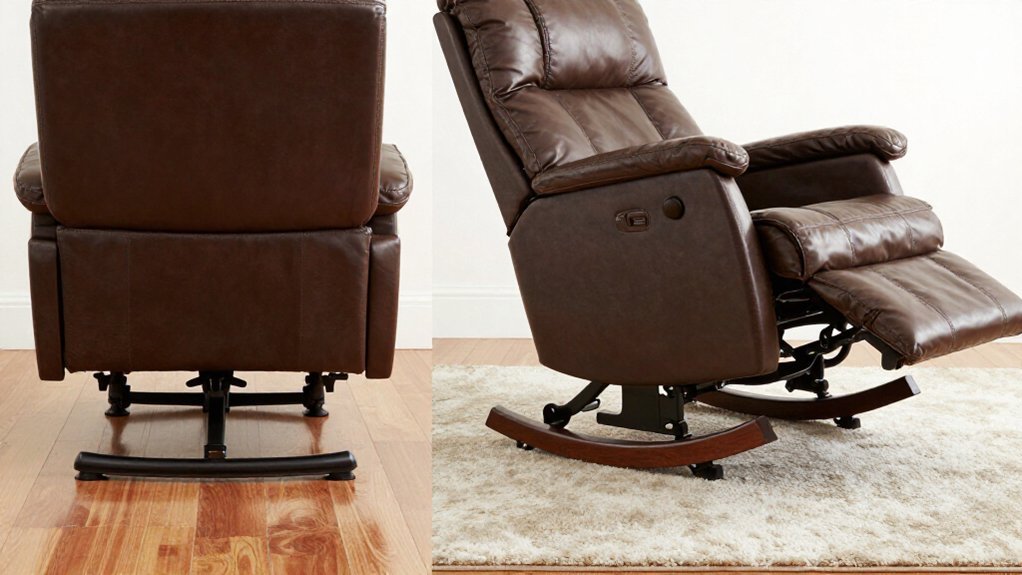
You’ll notice a glider recliner moves along a fixed track when you’re leaning back, unlike a standard stationary recliner that stays put once you settle in. The base design uses a linear gliding path, so you get controlled, even motion rather than a locked position.
This track-based setup means you’re shifting on a set route, not pivoting or staying still, which changes how the chair fits your room and your habits.
Recommended Products

✅►【Applicable Brands】 -- Compatible with many recliner chair motors and lift chair systems from Okin, Limoss, Action, Berkline, Comfort Chair, Golden, La-Z-Boy, Med-Lift, Mega Motion, Pride and other brands using the same 2-button, 5-pin round plug design. Please verify your original plug, button functions, and mounting dimensions before purchase

Features a compact round design with easy-to-press buttons, compatible with various recliner and lift chair brands using a standard 5-pin plug

【COMPATIBLE WITH】 : Power recliner power supply with electric recliner power cord for OKIN, Limoss, Pride, Golden, Lazboy, Berkline, Med-lift and Tranquil Ease Lift Chair, Cheers electric sofa, Power Recliner DeltaDrive and BetaDrive Motors with a two pin (flat & round) connection to the the motor.
Motion Mechanism Distinction
Picture a standard recliner locked in place as you lean back, then imagine your seat gently sliding forward and backward along a fixed track even after you’ve settled in. That’s the core difference you’ll notice with a Glider Recliner.
While you control the recline with a side lever or power button, the gliding motion keeps working as you lounge. You aren’t stuck in one spot; your body keeps moving in a smooth, rhythmic pattern. This motion helps you relax in ways a stationary chair simply can’t match.
You’ll need extra space for this feature. The track demands clearance in front and behind your chair, so measure your room before you buy. The gliding mechanism, whether manual or power-driven, defines what sets these recliners apart from standard models.
Base Design Variations
Unlike a standard recliner that sits flat on the floor, a glider recliner rests on a fixed track base that lets the entire chair slide forward and backward. This base design changes how you’ll use and place your glider chair in your home.
You’ll notice the smooth, back and forth motion happens along metal tracks mounted on a stationary frame, keeping the base fixed while only the seat moves.
A Power Glider adds electric controls, so you can adjust recline and glide without manual effort.
You’ll need extra clearance behind and in front, since the chair travels during use, which challenges placement in smaller rooms.
Some bases include swivel functions, letting you rotate 360 degrees while maintaining the glide motion.
Manual or Power Operation: Choosing Your Glider Recliner Type
How do you want to control your glider recliner when you’re tired at the end of a long day? With manual glider recliners, you pull a side lever or shift your weight to recline, which gives you direct control but requires more effort when you’re holding a sleeping baby.
Power glider recliners use built-in motors with a button or wireless remote, often cordless with a battery pack, so you get smoother press-to-adjust reclining. Models like the Babyletto Kiwi Power Recliner and Swivel offer electric recline plus 270-degree swivel, designed to recline silently without a jolt.
Many Power Recliner and Swivel (cordless with remote) units let you control the leg rest lift and backrest together for smooth rocking and reclining shifts. Manual options start around $300 while quality power models typically run $400–$500 or more.
Recommended Products

Swivel & Relaxtion: The recliner features a 360°swivel, 30°gentle rocking, and 105-135 degrees free tilt, Whether sitting upright or lying flat for a nap, it can provide you with an ideal comfortable angle. The chair's backrest adopts a carefully designed segmented structure, providing targeted support for the upper and lower back, effectively dispersing pressure and reducing back fatigue and discomfort

SMOOTH 3-IN-1 MOTION - Unwind with seamless transitions between a gentle rocking motion, Smooth 360-Degree Rotation, and a press-back reclining motion, perfect for a living room or game recreation room

Swivel & Relaxation—— This recliner features a 360° swivel and reclines up to 165° using the side handle. It also offers gentle rocking for smooth,, making it ideal for stretching, relaxing, or daily use. Kindly Note: The reclined angle cannot be locked; the backrest will automatically return to the upright position (90°) when you get up.
Cushioning, Ottoman Length, and Lumbar Support: Key Comfort Features
When you’re spending hours in a glider recliner, the cushioning makes all the difference between comfort and fatigue. You’ll want to check several features before you buy.
- Look for overstuffed cushions on the seat and arms, since these cradle you through extended periods.
- Confirm the ottoman length suits your legs, so your feet rest flat without cramping or strain.
- Seek lumbar support features, like built-in pillows that protect your lower back during long sitting sessions.
- Consider an Upholstered Swivel design with memory-foam-style padding for better pressure-point relief.
Test how the reclined position feels with the foot-rest, gliding motion working together. Higher-end models add pillow-top layers for extra body support. Make sure the whole setup feels stable for your frame.
Recommended Products

[Lifting Assistance] This reclining chair assists in standing up to 45 degrees. It's great for elderly people and those recovering from any injuries.

Premium Chenille Fabric & Ergonomic Comfort – Crafted from soft, durable chenille with high-density sponge cushioning, this recliner offers the perfect balance of plush comfort and firm support. The breathable, stain-resistant leather-look fabric is a breeze to wipe clean – no more stress over spills or daily wear. Built on a rugged metal frame, it supports long-lasting durability and reliable stability.

Designed for Daily Assistance: The smooth and quiet lift mechanism helps users stand up and sit down easily that ideal for seniors or anyone with limited mobility
Space Requirements and Price Ranges to Plan For
Before you buy a glider recliner, you’ll need to map out your space and set a realistic budget. Unlike rocking chairs, gliders move along a fixed track, so you’ll need extra breathing room for safe operation and full recline clearance. Measure carefully, especially for small spaces, since these units demand more floor area than stationary recliners.
Your ZIP Code can affect delivery fees and local taxes, so factor that into your total. Manual models often start near $300, while quality glider recliners typically begin around $400 to $500. Electric versions with USB ports run higher, commonly $550 to $700. Budget roughly $200 to $300 for basic manual styles, $400 to $700 for midrange picks, and $1,000 or more for premium builds. Watch for add-ons like lumbar pillows or separate ottomans that shift your final cost.
Recommended Products

GREENGUARD GOLD CERTIFIED: This product has undergone rigorous scientific testing for over 10,000 chemical emissions and VOCs. It contributes to cleaner indoor air, creating a healthier environment for your baby to sleep, play, and grow.

Excellent Solution for Nurseries And Living Room - This recliner chair put the idea-centered” into basic practice of “humanized design”. You can fully relax yourself in this magic nursery glider chair.

【Compact & Cozy】 Designed at 33.9 in D x 39.4 in W x 40.6 in H, this recliner chair for adults is perfect for small spaces. Use it as a nursery chair, side chair, or reading chair in living rooms, bedrooms, or apartments for versatile comfort.

I've spent years obsessing over the details that make a house feel like a home — from the perfect bedding layers to a thoughtfully styled coffee corner. My focus is on modern, aesthetic home decor ideas that are beautiful, trend-aware, and actually achievable. Great style shouldn't require a big budget — just the right inspiration.
Follow on Facebook