



Linen curtains can last decades with proper care, yet most people ruin them in the wash.
You’ll need to check labels, vacuum dust, spot-treat stains, and choose between hand or gentle machine washing with mild detergent.
Rinse thoroughly, air-dry in shade, and iron while slightly damp for best results.
Check Your Linen Curtain’s Care Label First
Where should you start when your linen curtains need freshening up? You grab the care label first, since that’s where you’ll find the rules for your specific panels. Some linen curtains carry “dry clean only” warnings, and you’ll want to spot those before you do anything else.
Always check your linen curtain’s care label first—it’s where you’ll find the specific cleaning rules for your panels.
If the label allows you to clean linen curtains at home, it’ll tell you whether machine or hand washing works better for your fabric. You’ll also see temperature guidance, and most labels suggest lukewarm water to prevent shrinkage. Look for detergent notes too, and pick a non-bleach detergent that won’t weaken the fibers.
The label may mention drying details, so you’ll avoid wringing and keep panels out of direct sunlight. Follow those instructions, and your curtains stay intact.
Recommended Products

DOUBLE THE HORSEHAIR = SUPERIOR CLEANING POWER - Engineered with extra-dense, double-fill soft horsehair bristles for deeper dust pickup while remaining gentle on delicate surfaces.
![Pure Bedding Bed Sheets - Queen Sheet Set [4-Piece, Sky Blue] - Hotel Luxury 1800 Brushed Microfiber - Soft and Breathable - Deep Pocket Fitted Sheet, Flat Sheet, Pillow Cases](https://m.media-amazon.com/images/I/515lvLmtllL._SL500_.jpg)
✅ Luxurious Hotel Style Bedding - Live the life of luxury with our lustrous smooth sateen weave bedding. Ideal for any room in your house. Offers the comforts of a hotel bed without the hefty fees!
![Pure Bedding Bed Sheets - King Sheet Set [4-Piece, Navy] - Hotel Luxury 1800 Brushed Microfiber - Soft and Breathable - Deep Pocket Fitted Sheet, Flat Sheet, Pillow Cases](https://m.media-amazon.com/images/I/51e8GODjLsL._SL500_.jpg)
Luxurious Hotel Style Bedding - Live the life of luxury with our lustrous smooth sateen weave bedding. Ideal for any room in your house. Offers the comforts of a hotel bed without the hefty fees!
Vacuum and Spot-Clean Before Washing
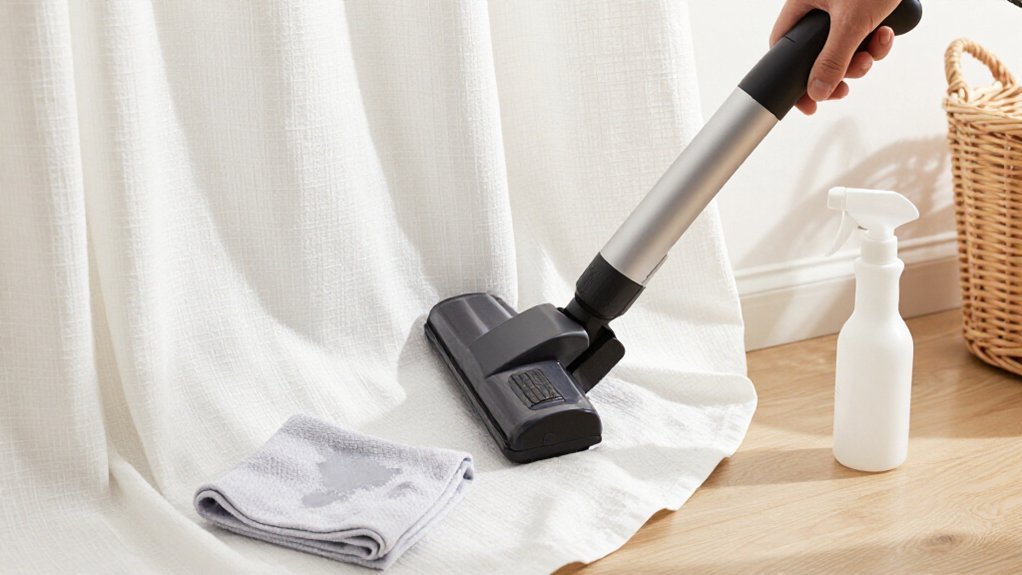
Before you wash your linen curtains, you’ll want to remove surface dust and tackle any stains. Use a vacuum cleaner with a soft brush attachment to remove dust, working from top to bottom in small sections. Keep suction low, especially around pleats and hems, so you don’t rough up the fabric or deepen wrinkles.
Spot clean stains before laundering, blotting from the outer edge toward the center to stop spreading. Use a mild detergent mixed with cold water as a gentle stain remover, or apply a baking soda paste for tougher spots. Let it sit fifteen minutes, then rinse with a damp cloth. Blot dry, and you’ll avoid overloading the washing machine later with already-clean areas.
Recommended Products

★100% BLACKOUT CURTAINS: The environmentally dual-sided linen textured fabric can block out 100% of sunlight and UV rays. The benefit is to offer you a dark environment, bringing you a good night's sleep during the day. It also provides you with a movie-watching atmosphere.

★100% BLACKOUT CURTAINS:The environmentally friendly, triple-layer, non-coated linen textured fabric can block out 100% of sunlight and UV rays. It offers a dark environment, perfect for a good night's sleep during the day and creating a movie-watching atmosphere in the living room.

Anti-dust Curtains: Lab proven effective in filtering 62.5% of dust particles due to melt blown layer(mask raw material) added. Effectively prevent wildfire smoke allergenic pollen, pet hair and street dust from entering the room, isolating dangerous sources of respiratory diseases. Ideal for pet owners and allergy sufferers.
Hand Wash Delicate or Vintage Linen Curtains
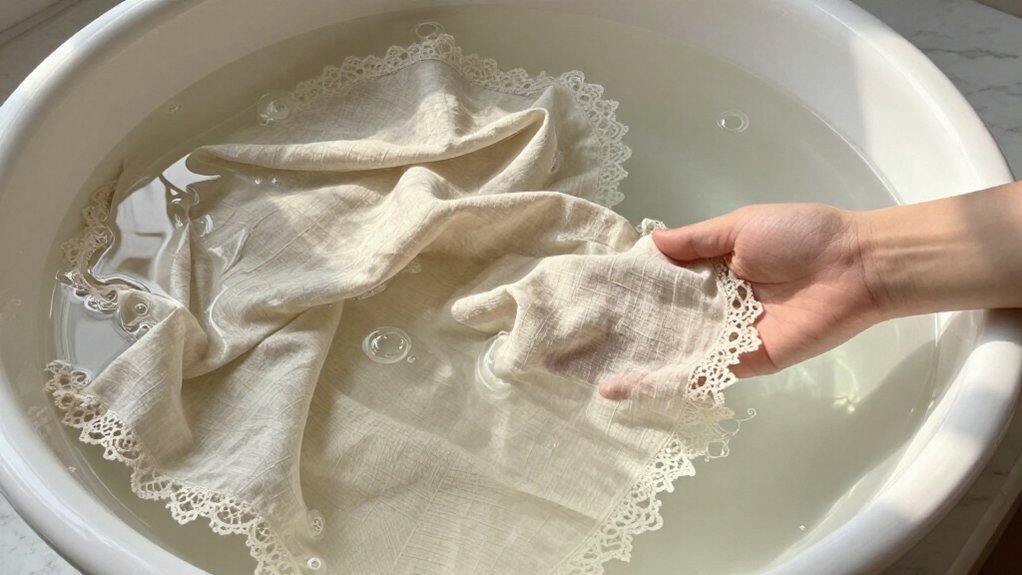
If your linen curtains are delicate, vintage, or have fragile stitching, you’ll want to skip the washing machine entirely and wash them by hand instead. Hand wash your linen curtains in a large basin filled with lukewarm water and a small amount of mild, non-bleach detergent. Soak them for about ten minutes, then gently swish the fabric with your hands. Avoid scrubbing, which stresses fragile fibers.
Drain and rinse thoroughly, often requiring more than one rinse, to remove all soap. Do not wring or twist the fabric; let excess water drain naturally to reduce stretching and wrinkling. Hang your curtains immediately and air dry until slightly damp.
This deep cleaning method protects vintage linen better than any gentle cycle could, preserving texture and preventing heat damage.
Recommended Products

Versatile Hanging Options: Set of 2 Panels.Each panel measures 52 inches wide by 84 inches long, with a back tab and loop pocket top design that provides three hanging options: an elegant pleated look from the back patch, a classic gathered effect with rod pocket style, or the ability to hang with clip rings (not included).

Intricate geometric embroidery adds abstract style to any room of your home
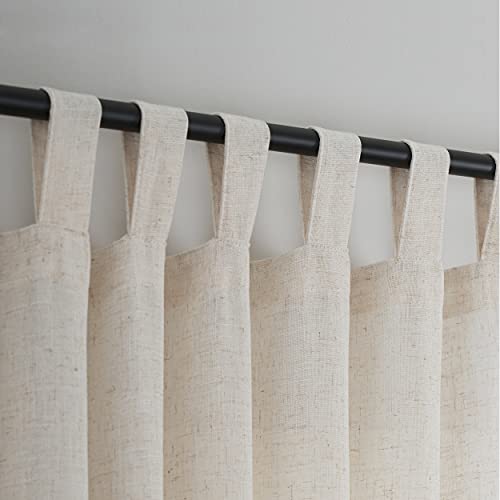
Versatile for Multiple Rooms & Decor Styles. Ideal for living rooms (bright yet cozy ambiance), bedrooms (gentle light filtering), studies (glare reduction for reading/working), and dining rooms (natural elegance for mealtime). The neutral linen texture complements diverse styles, from minimalist to modern farmhouse
Machine Wash Sturdy Linen on Gentle Cycle
Sturdier linen can handle machine washing, but you’ll still want to treat it with care. Check the care label first, and if it allows machine washing, you can wash linen curtains on a gentle/delicate cycle with lukewarm water around 40°C/104°F, or cold if the label prefers.
Use a mild detergent, and avoid bleach, enzymes, and strong chemicals like sodium borate or sodium hydroxide. Place your linen curtains without individual wrapping into a mesh laundry bag to reduce snagging and wrinkling. Avoid overloading the washing machine, since crowded drums cause excess creasing and poor cleaning.
Set a low heat setting for the spin cycle, and remove curtains immediately when the cycle ends so wet fabric doesn’t set deep wrinkles. Skip the dryer unless the label specifically permits it, and instead hang to air dry. Remove them while slightly damp to minimize shrinkage.
Recommended Products

Ready Made: Package includes 2 panels of linen blend tier curtains, each panel measuring 30"W x 36"L. Each panel has 2 inch high pole pocket, which works well with tension rods or normal rods, easy to install and slide. It is recommended to use a rod with a diameter of 1 inch or less.

Upgraded Premium Linen Blend Fabric:Our natural linen blend curtains are crafted from high-quality natural linen & imported polyester.The abundant natural linen texture delivers a cozy, breathable and skin-friendly touch, while the upgraded blend enhances overall durability, rip resistance and anti-wrinkle performance, keeping the drapes neat and elegant for long-term use.

READY MADE: 2 panels per package. Each curtain panel measures 52" wide x 90" long (Total width is 104"). Top design of 8 metal grommets per panel with 1.6 inches inner diameter which makes the curtains easy to install and and durable to use.
Rinse Thoroughly Without Wringing
You’ll rinse your curtains in cold water, swishing them gently with your hands to release soap without stressing the fibers. Press the fabric lightly against the tub’s side to release excess water, but don’t wring or twist it tight. Hang them right away so they drip dry smoothly, keeping wrinkles to a minimum while the linen stays wet.
Recommended Products
![Pure Bedding Bed Sheets - California King Sheet Set [4-Piece, Dark Grey] - Hotel Luxury 1800 Brushed Microfiber - Soft and Breathable - Deep Pocket Fitted Sheet, Flat Sheet, Pillow Cases](https://m.media-amazon.com/images/I/51WxZ7WxUGL._SL500_.jpg)
Luxurious Hotel Style Bedding - Live the life of luxury with our lustrous smooth sateen weave bedding. Ideal for any room in your house. Offers the comforts of a hotel bed without the hefty fees!
![Pure Bedding Bed Sheets - Full Sheet Set [4-Piece, Light Grey] - Hotel Luxury 1800 Brushed Microfiber - Soft and Breathable - Deep Pocket Fitted Sheet, Flat Sheet, Pillow Cases](https://m.media-amazon.com/images/I/51aDi5IMIaL._SL500_.jpg)
Luxurious Hotel Style Bedding - Live the life of luxury with our lustrous smooth sateen weave bedding. Ideal for any room in your house. Offers the comforts of a hotel bed without the hefty fees!
![Pure Bedding Bed Sheets - King Sheet Set [4-Piece, Light Grey] - Hotel Luxury 1800 Brushed Microfiber - Soft and Breathable - Deep Pocket Fitted Sheet, Flat Sheet, Pillow Cases](https://m.media-amazon.com/images/I/516oahEBusL._SL500_.jpg)
Luxurious Hotel Style Bedding - Live the life of luxury with our lustrous smooth sateen weave bedding. Ideal for any room in your house. Offers the comforts of a hotel bed without the hefty fees!
Cold Water Rinse
After washing, move your linen curtains to a basin or tub filled with cool water for the first rinse. Submerge the curtains in the water completely, and rinse thoroughly to remove all traces of mild detergent from the washing process. You want the water to run clear, without soap residue clinging to the fibers.
Keep your movements gentle as you work, pressing the fabric softly to let the cool water flow through. Do not wring or twist the linen, since this stresses the fibers and creates sharp creases that are hard to remove. Instead, let excess water drain naturally.
Once you’ve finished rinsing, hang the curtains immediately while they’re still damp. This prevents deep wrinkles from setting in, and helps your linen dry with its natural texture intact.
Gentle Swish Motion
When you’re ready to rinse, fill your basin or sink with cool water and lower the curtains in slowly, letting them sink on their own without pushing or forcing them down. Use clean cool water, and make sure you’ve drained the soapy water completely first.
Now, use a gentle swish motion with your hands, lifting and lowering the fabric lightly. Shake the curtains gently underwater to loosen any remaining soap. Don’t scrub, twist, or pull. You’re rinsing linen curtains properly when the water stays clear, so check and repeat if needed.
To prevent damage, handle the wet fabric carefully. You can dry linen curtains flat or on a line, but always without wringing, since twisting stresses the flax fibers and causes creases you can’t easily remove.
Pressed Water Release
Once you’ve finished the gentle swish, drain the basin completely and refill it with clean, cool water for rinsing. You’re now washing your linen curtains in lukewarm cool water to lift away all traces of soapy water. Gently agitate the fabric through the rinse, moving it slowly without scrubbing or twisting. You must avoid wringing at every stage, since that action overstretches the fibers and locks in deep creases.
Check for detergent residue by smelling the fabric and watching for suds. If you detect either, drain and rinse linen curtains again, because leftover soap stiffens linen and draws more dirt.
For the pressed water release, support the curtain’s full weight, press gently with clean hands, or lay it between towels. Let gravity do the work as water drips away naturally.
Air Dry Linen Curtains on a Line or Rack
Choose a drying location that protects your linen from harsh conditions, whether that means a shaded outdoor spot or a well-ventilated indoor rack away from direct sun.
Prepare curtains properly by shaking them out lightly after washing to release excess water, then hang them immediately so wrinkles don’t set into the damp fabric. Hang with care, positioning each panel with enough space between folds for air to circulate, and plan to remove them while slightly damp if you intend to iron them later.
Recommended Products

MEASUREMENT: Customizable in any size. Length is measured from the eyelet ring where the curtain hooks are attached to floor. Panel width is the finished width between the first pleat to the last. If your rod or track length is 100 inches, 2 panels each 50 inches width will work. For better fullness, you can order extra width, 2 panels each no more than 60 inches long will fit.
MEASUREMENT: Customizable in any size. Length is measured from the eyelet ring where the curtain hooks are attached to floor. Panel width is the finished width between the first pleat to the last. If your rod or track length is 100 inches, 2 panels each 50 inches width will work. For better fullness, you can order extra width, 2 panels each no more than 60 inches long will fit.

MEASUREMENT: Customizable in any size. Length is measured from the eyelet ring where the curtain hooks are attached to floor. Panel width is the finished width between the first pleat to the last. If your rod or track length is 100 inches, 2 panels each 50 inches width will work. For better fullness, you can order extra width, 2 panels each no more than 60 inches long will fit.
Choose Drying Location
Where should you hang your freshly washed linen curtains to dry? You need to pick a dry area with good airflow, but you’ll want to avoid direct sunlight. Instead, choose a shaded area where indirect light protects the fabric’s color.
When you air-dry linen curtains this way, you help them remain fresh and keep their natural texture intact. You can use the washing line outdoors in a covered spot, or set up a drying rack indoors near an open window. Either option works well for drying linen curtains without risking shrinkage or fading.
Just make sure air moves freely around the fabric so moisture escapes and wrinkles don’t set. You’ll get better results than any machine could provide, and your curtains will last longer too.
Prepare Curtains Properly
Before you hang your linen curtains to dry, take a moment to shake them out gently and smooth the fabric with your hands. This helps remove loose dust and debris while preventing deep creases from setting in.
When you prepare your linen curtains, check each stained area one last time. If you used a mesh laundry bag during washing, remove it now. Choose a gentle cleaning solution earlier in the process, and spot-treat any remaining marks before drying begins.
If you used a dryer, pull the curtains out while they’re still slightly damp. You’ll hang the curtains immediately so gravity releases wrinkles naturally. Use curtain hooks to secure them straight on the line or rack, and keep them in shade to prevent fading.
Avoid high heat entirely, since heat shrinks linen and sets wrinkles faster than air drying.
Hang With Care
Grab your curtains while they’re still slightly damp, and head straight to your drying line or rack. You’ll keep them clean and without damage when you use air drying rather than high heat. This protects your linen from shrinkage and preserves its natural texture.
Avoid Direct Sunlight by hanging your curtains in a shaded outdoor spot or indoors. Smooth wrinkles out by hand as you hang them, letting the weight set the shape. Use clothespins or hangers spaced evenly across the top to distribute weight. Remove from the dryer early if you must use one, then finish drying on the line.
Air drying your curtains after washing takes a bit longer, but it keeps the fabric strong and looking its best for years.
Machine Dry Linen Curtains on Low Heat
After washing, you’ll move your linen curtains to the dryer with care. You already used a gentle cycle, mild detergent, and a mesh laundry bag, and you avoided overloading the washing machine.
Now, you select low heat, since medium heat or direct sunlight can damage fibers. Heat can cause shrinkage, so you keep the temperature down and skip dryer sheets. You don’t stuff the drum, because crowded linen wrinkles badly.
You pull the curtains out when they’re still slightly damp, not bone dry. This timing matters, since overdrying sets hard creases. You shake each panel once, then hang it promptly so gravity does the smoothing work. You avoid ironing now, because that step comes later in the process.
Recommended Products

READY MADE: 2 panels per package. Each curtain panel measures 52" wide x 92" long (Total width is 104"). Top design of 8 metal grommets per panel with 1.6 inches inner diameter which makes the curtains easy to install and durable to use.

WELL MADE - Made of faux linen fabric (30% linen, 70% faux, 225GSM). Back Tab & Rod Pockets Design with 3" diameter, universal fit to most of curtain rods. 2" bottom hem enable sheer curtains hanging vertically.

Pinch Pleat Design & Memory Shape Trained: Each 50 inch wide curtain panel is designed with 8 pinch pleats, using more fabric to achieve this full aesthetic appearance—making it ideal for wider windows. 248°F memory shape trained technology ensures our panel retains its original form, maintaining a neat, custom-like finish
Iron Linen Curtains While Slightly Damp
With your curtains still slightly damp from the dryer, you’re ready to iron them before wrinkles set in. You can also lightly mist them with cold water if they’ve dried too much. Choose a Gentle heat setting, medium or linen-specific, and keep steam low to protect the flax fibers.
Work in small sections, moving from top to bottom without lingering in one spot. Iron on the reverse side or use a pressing cloth to prevent shine and heat damage. Hang curtains immediately while warm so they settle flat. Avoid direct sunlight; it can fade areas if you’re ironing near windows.
You wash linen curtains every few months, and proper ironing extends their life. Don’t overload your mesh bag during the wash cycle, and use soapy water to refill your spray bottle as needed for touch-ups.
Recommended Products

Size & Quantity: Each pack contains 2 tier curtains, each 30" wide and 36" long, total width is 60", total length is 37.5" including 1.5" header. The rod pocket applicable to curtain rods no wider than 1", the bottom hem rod pocket fits for curtain rods no wider than 1"
Upgraded Premium Linen Blend Fabric:Our natural linen blend curtains are crafted from high-quality natural linen & imported polyester.The abundant natural linen texture delivers a cozy, breathable and skin-friendly touch, while the upgraded blend enhances overall durability, rip resistance and anti-wrinkle performance, keeping the drapes neat and elegant for long-term use.

Rich Linen: The cross-woven design blended with real linen and polyester provides our natural linen curtain a unique subtle pattern compared with conventional plain curtain, which also makes these drapes soft and durable.
Maintain Linen Curtains Between Washes
Since linen collects dust and pollen faster than heavier fabrics, you’ll want to tend to your curtains every few weeks between those deeper washes.
Shake your Clean Curtains outdoors, or gently vacuum them with a soft upholstery brush attachment. This removes dust and pollen trapped in the flax fibers. Spot-cleaning small marks keeps Washing Linen sessions less frequent; blot with a cloth lightly dampened with mild cleaner and water, but don’t soak the fabric. Remove loose lint with a roller or adhesive tape before it settles into the weave, especially near hems and folds.
Shake curtains outdoors or vacuum with a soft brush to release trapped dust and pollen from flax fibers.
For deeper mid-cycle care, vacuum in sections from top to bottom, keeping suction low to prevent abrasion. You can also refresh without washing by using a light fabric-freshener spray made for delicate textiles, then letting them fully dry before rehanging.
Limit exposure to direct sunlight, as it weakens fibers over time.
Recommended Products
![Pure Bedding Bed Sheets - Full Sheet Set [4-Piece, Dark Grey] - Hotel Luxury 1800 Brushed Microfiber - Soft and Breathable - Deep Pocket Fitted Sheet, Flat Sheet, Pillow Cases](https://m.media-amazon.com/images/I/51g9L7FnUsL._SL500_.jpg)
Luxurious Hotel Style Bedding - Live the life of luxury with our lustrous smooth sateen weave bedding. Ideal for any room in your house. Offers the comforts of a hotel bed without the hefty fees!

Innovative no-drill mounting secures firmly in seconds without damaging frames. The spring-loaded design fits various wall types, making it ideal for renters and quick, tool-free setup.
Know When to Dry Clean Instead
Sometimes you’ll save time and protect your curtains by taking them to a professional rather than washing them yourself. You should dry clean only items when the label demands it, or when you’re fighting stubborn stains that home methods can’t touch safely. Professional cleaning helps prevent shrinkage and minimize wrinkling risk, especially with vintage or delicate pieces.
Check if your curtains are lined curtains or have special trims/tapes that water and agitation could damage. Consider dry cleaning when you’re unsure of the linen blend/finish, since some treatments react badly to moisture. Remember that moisture sensitive fabrics need careful handling you can’t guarantee at home.
Ask your cleaner if they recommend wet cleaning or solvent methods for your specific curtain type.
Recommended Products

MEASUREMENT: Customizable in any size. Length is measured from the eyelet ring where the curtain hooks are attached to floor. Panel width is the finished width between the...

I've spent years obsessing over the details that make a house feel like a home — from the perfect bedding layers to a thoughtfully styled coffee corner. My focus is on modern, aesthetic home decor ideas that are beautiful, trend-aware, and actually achievable. Great style shouldn't require a big budget — just the right inspiration.
Follow on Facebook